The Gut-Bone Axis, How Flavonoids May Protect Bone Density After Menopause
Postmenopausal bone loss has long been framed as a hormonal problem. That framing is being revised. A growing body of research on the gut-bone axis is showing that intestinal microbiota function as critical regulators of bone density, and that flavonoids, the polyphenol compounds found across plant foods, may protect bone not through hormonal mimicry alone but through their effects on gut composition.
What the gut-bone axis actually means
The gut-bone axis refers to the bidirectional communication between intestinal microbiota, the gut mucosal barrier, immune signaling, and bone metabolism. A review published in the Journal of Functional Foods synthesized current evidence showing that flavonoids operate as key mediators within this axis. When gut bacteria metabolize flavonoids, the resulting compounds can suppress osteoclast formation (the cells that break down bone) and promote osteoblast differentiation (the cells that build bone).
The connection is particularly relevant after menopause. Declining estrogen not only accelerates bone resorption directly, it also increases intestinal permeability and reduces gut microbial diversity. A less stable gut environment undermines the secondary pathway that flavonoids use to support bone health.
Isoflavones and naringin: the most studied compounds
Among flavonoids, isoflavones and naringin have attracted the most focused research in the context of postmenopausal bone loss.
Isoflavones are concentrated in soy-based foods including tofu, edamame, tempeh, and miso. They bind to estrogen receptors and are metabolized by gut bacteria into equol, a compound that inhibits osteoclast activity in a manner that resembles estrogen’s mechanism. Equol production varies significantly between individuals and depends on the composition of each person’s gut microbiome. Populations with historically higher soy intake, particularly in East Asia, show higher equol-producing capacity. A standard serving of firm tofu (100g) contains approximately 20 to 30mg of isoflavones.
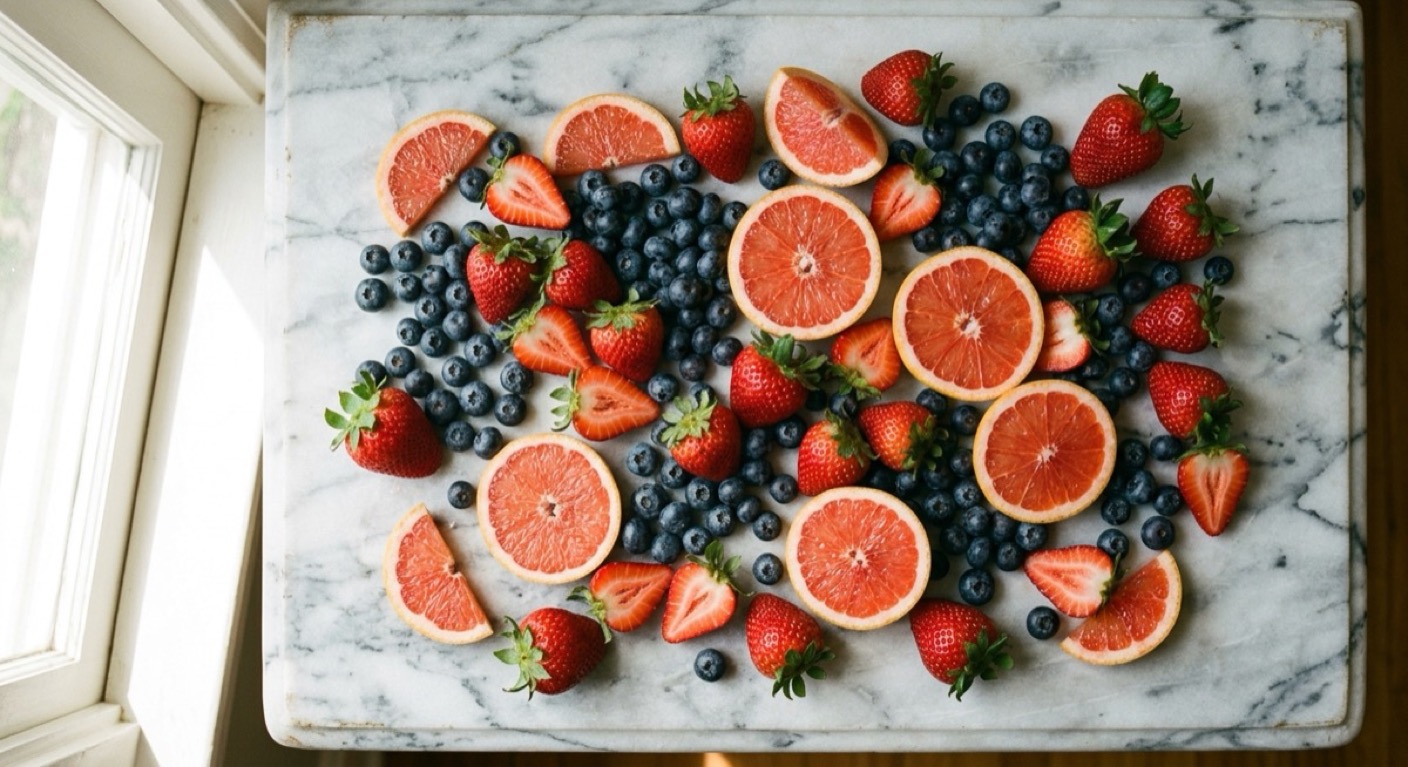
Naringin is concentrated in the peel and pith of grapefruit, oranges, and lemons. In preclinical models, it has shown the ability to inhibit osteoclast formation and stimulate osteoblast differentiation. Studies have used doses in the range of 40 to 80mg per day. A single whole grapefruit provides roughly 70 to 100mg of naringin.
Akkermansia: a new link in the chain
Research published in the Journal of Translational Medicine adds a more specific mechanistic layer. Phytohormones including isoflavones and naringin were shown to promote growth of Akkermansia muciniphila in the gut. Akkermansia is a bacterium that lives in the intestinal mucus layer, reinforces the gut barrier, and reduces systemic inflammation by lowering levels of pro-inflammatory cytokines including TNF-alpha and IL-6.
Those same cytokines, when chronically elevated, stimulate osteoclast activity and accelerate bone resorption. The proposed pathway runs: flavonoid intake promotes Akkermansia growth, Akkermansia reduces gut permeability and inflammatory signaling, reduced inflammation decreases osteoclast activation, bone density is better maintained. Each step in that chain still requires more rigorous human clinical verification, but the mechanistic structure is more defined than it was even two years ago.
Market response
The supplement industry is moving alongside this research. Sōlaria Biō launched Bōndia (SBD111), a synbiotic (a product combining probiotics with prebiotic fiber to support their growth) specifically designed to influence the gut-bone axis. In a clinical study involving women with osteopenia, the state in which bone density is lower than normal but not yet in the osteoporosis range, 85% showed bone density improvement.
O Positiv launched its Meno line targeting peri- and postmenopausal women, incorporating brain, heart, and eye health formulas alongside bone support. The scale of the potential market is reflected in one widely cited figure: approximately 80% of women globally take a supplement daily. PCOS, a hormonal condition affecting up to 13% of reproductive-age women and associated with long-term estrogen irregularity, represents another group where the gut-bone connection warrants closer attention.
Food sources, a practical starting point
Research consistently points to whole food intake over isolated supplements as the preferred delivery mechanism for flavonoids. The reasoning is straightforward: food-based flavonoids arrive with companion compounds that broaden their effect on gut microbiota, and the long-term safety data for high-dose isolated flavonoid supplements lags behind what is known about dietary intake.
Key food sources by flavonoid type:
- Isoflavones: Firm tofu (20~30mg per 100g), edamame, miso, tempeh
- Naringin: Grapefruit (70~100mg per fruit), oranges, lemon peel
- Quercetin: Onion, apple, kale (approx. 25~50mg per medium onion)
- Anthocyanins: Blueberries (100~400mg per 100g), cherries, blackberries
- EGCG: Green tea (approx. 50~100mg per 150ml cup)
For anyone already taking a multivitamin or combination supplement, reviewing current flavonoid and isoflavone intake before adding a targeted supplement is the recommended first step to avoid stacking without purpose.
What this research changes
The gut-bone axis research does not replace the established understanding of estrogen’s role in postmenopausal bone loss. What it adds is a second layer of modifiable factors: gut microbiome composition, intestinal barrier integrity, and dietary plant compound intake. Consistently varied flavonoid intake through whole foods is a practical way to support this secondary pathway. For women navigating perimenopause or managing conditions tied to hormonal irregularity, the case for treating gut health as a bone health variable is now more substantiated than assumed.