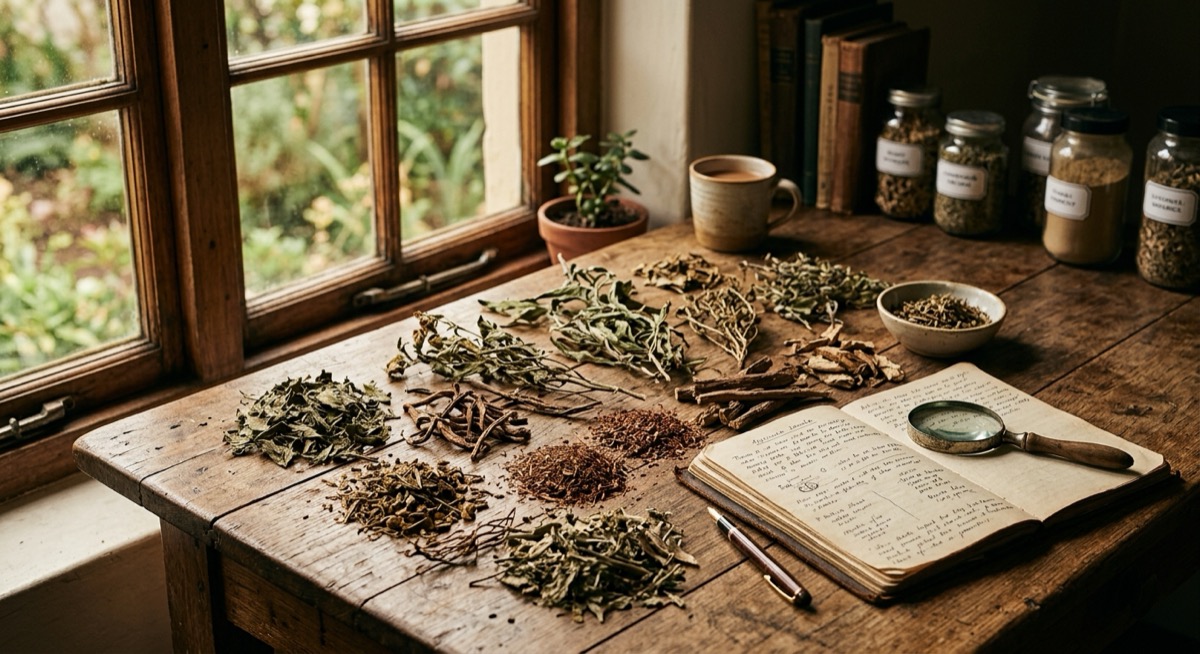
Fadogia Agrestis, Androgen Claims and Very Limited Clinical Evidence in 2025 Review
Fadogia agrestis is a Nigerian plant with animal trial reports of androgen stimulation. Despite popularity from influencers and podcasts (Andrew Huberman et al.) as a “testosterone booster”, human RCT data is very limited and safety evaluation is insufficient, per a 2025 critical review.
The Critical Reviews in Toxicology 2025 review systematically evaluated fadogia agrestis human clinical data. Results: 1~2 human RCTs, <30 subjects each, short-term (2~4 weeks). Animal data interesting but human application unproven. Some animal studies report kidney/liver toxicity → safety data insufficient.
What is Fadogia Agrestis
Fadogia agrestis is a Rubiaceae small shrub. Native to Nigeria and West Africa. Stems and leaves are medicinal. Traditionally used in Nigeria/Senegal for erectile dysfunction and malaria support.
Active compound matrix (limited research):
- Alkaloids: precise chemistry uncharacterized
- Saponins: small amount
- Iridoids: some
Critical issue: no standardization marker. Supplement labels show “Fadogia agrestis Extract 600mg” but actual active content/quality verification difficult.
Marketing vs Scientific Data
Marketing/influencer claims:
- “Testosterone +200~300%”
- “Exercise capacity explosion”
- “Natural legal PED (performance enhancing drug)”
Scientific data:
- Animal trials (rats): 4 trials report testosterone/LH elevation — all from single Nigerian lab (Yakubu et al.)
- Human trials: 1~2 small short-term (<30 subjects, 2~4 weeks). Observed in main nutrient/multi-component matrices.
- Solo human RCTs: essentially none
Animal Safety Signals
- Rat trial kidney/liver enzyme elevation: some animal reports
- Possible testicular toxicity: one animal trial sperm motility effect
- High-dose long-term: safety unevaluated
Clinical Data
- Critical Reviews in Toxicology 2025: human RCTs very limited, safety evaluation lacking
- Animal trials (Yakubu et al. 2008-2018): rat androgen reports
- No human trials: standardization, safety, efficacy unproven
Market Use (Reality Check)
Who recommends:
- Andrew Huberman podcast (Stanford neuroscientist)
- Tim Ferriss
- Some exercise/biohacking communities
Why popular:
- “Natural testosterone booster” marketing
- Influencer + podcast effect
- Animal trial intrigue, not human clinical
- Lacks both effect evidence + safety evaluation
In Korea:
- Some overseas-purchased supplements available
- No Korean MFDS approval
- Clinicians/pharmacists do not recommend
Cautions (Strong — Insufficient Data)
- Pregnancy/lactation: absolutely avoid
- Liver/kidney disease: avoid given animal signals
- Hormonal medications: clinical evaluation
- Prostate enlargement: androgen possibility, avoid
- Estrogen-sensitive cancers: clinical evaluation
- Long-term safety data lacking: absolutely avoid
- Human safety evaluation incomplete: absolutely avoid self-prescription
- 8 week + 4 week rest cycle (influencer): lacks safety data
Comparison — More Validated Options
For young exercise capacity/testosterone targets:
Validated naturals:
- Fenugreek (L23): consistent clinical, androgen·insulin dual
- Maca: libido·vitality clinical data
- Ashwagandha (L23): cortisol ↓ → indirect testosterone
Validated exercise:
- Beta-alanine + creatine + HMB: exercise capacity matrix
- Protein diet (1.2~1.6g/kg) + resistance exercise: foundation
Synergy Matrix (Cautious)
Fadogia alone not recommended. If attempted:
- Clinical evaluation essential
- 8 weeks + 4 weeks rest
- Kidney/liver/hormone monitoring
- Start at half of influencer-recommended dose
Consumer Message
Fadogia gains popularity through influencer/podcast marketing, but human clinical and safety data very limited. Animal trials being interesting doesn’t guarantee human effect/safety. Validated options like fenugreek, maca, ashwagandha, beta-alanine, creatine come first. Clinical evaluation essential before fadogia trial, kidney/liver monitoring. Spring 2026 exercise/hormone matrix cautious option. Distinguishing marketing vs data is core.