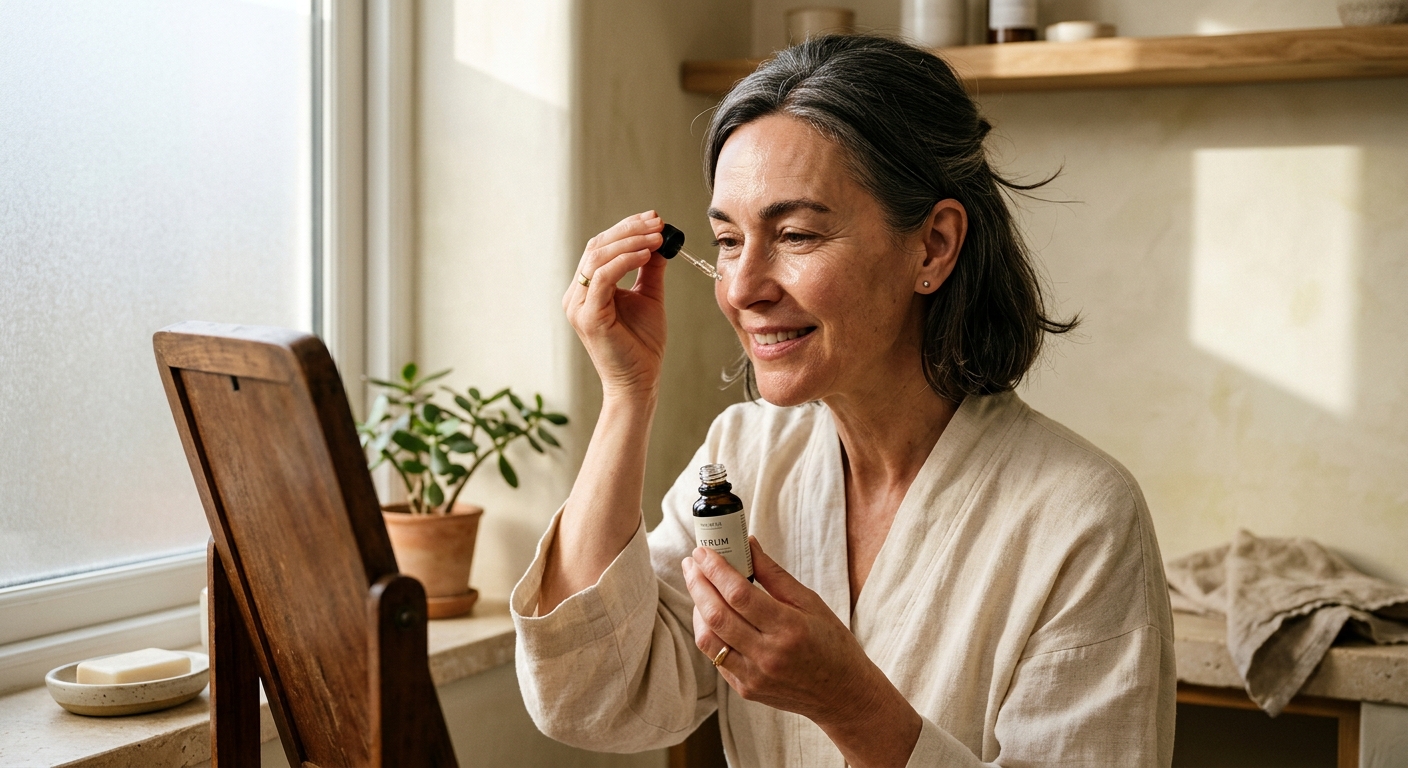
30 Percent of Collagen Disappears in Five Years After Menopause, Enter Estrogen Skincare
The figure is well established in dermatology: women can lose up to 30 percent of their dermal collagen within the first five years after menopause, followed by a roughly 2 percent annual decline. That is not a cosmetic nuance. It is a structural shift where the skin barrier itself thins, dries and loses elasticity. With the root cause identified not as sun or age but as estrogen decline, the American Society of Plastic Surgeons flagged in 2026 a new category of skincare that puts estrogen directly on the skin.
Why the first five years are the steepest
Estrogen signals fibroblasts to produce collagen and stimulates hyaluronic acid synthesis in parallel. In an estrogen-sufficient state, the skin produces matrix faster than it degrades it. Menopause inverts that balance. Estrogen drops, fibroblasts slow collagen production, degradation continues at its previous pace, and the result is net loss. The first five years are the steepest because a lifetime hormonal environment changes quickly and skin tissue has no time to adapt.
The consequences go beyond wrinkles. Thinner dermis tears more easily, heals more slowly and becomes more vulnerable to UV damage. Reduced hyaluronic acid means worse water retention, which shows up as dryness and itchiness. The common report from menopausal women that “my skin suddenly feels like a different organ” is physiologically accurate.
Estradiol versus estriol, what differs
The new estrogen-based skincare category relies on two main actives: estradiol and estriol. Estradiol is the dominant form of estrogen in reproductive-age women and the strongest. Estriol is a weaker form, mostly produced by the placenta during pregnancy. Dr. Horton, quoted in the ASPS article, explained that “estradiol is the strongest and most effective, but for patients sensitive to stronger estrogen, estriol can be recommended.”
The strength gap is an efficacy gap and a side-effect gap at the same time. Estradiol sends a stronger signal to fibroblasts and produces larger gains in collagen and hyaluronic acid, but it also carries a higher risk of skin irritation, hormonal acne, unwanted hair growth and melanocyte-driven hyperpigmentation. Estriol has a gentler profile with proportionally gentler results.
Who this category is actually for
Topical estrogen skincare is not a universal answer. ASPS defines the ideal candidate group clearly: perimenopausal and postmenopausal women, those experiencing hormonal skin changes like thinning, dryness and elasticity loss, and women who have undergone surgical menopause and face a sudden hormone cliff. The approach is fundamentally different from an anti-wrinkle routine in the 20s or 30s.
As of 2026, most of this category is distributed through prescription and compounding pharmacies in medical settings. In the general cosmetic market, plant-derived phytoestrogens like soy genistein and resveratrol are studied as alternatives but they cannot match the direct efficacy. If you are experiencing post-menopausal skin changes, the right first step is a conversation with a dermatologist or OB-GYN about whether topical hormone therapy fits your profile. A personal or family history of breast cancer, estrogen-dependent conditions or venous thrombosis requires specialist evaluation even for topical formulations.