DIM Reshapes Estrogen Metabolism in Postmenopausal Women on Estradiol Patches
The biggest hesitation around hormone replacement therapy is its impact on breast tissue. Beyond the prescription itself, what determines safety margin is how the prescribed estrogen is metabolized inside the body. The July 2025 issue of Menopause Journal published the first database analysis tracking exactly that question: how DIM supplementation reshapes estrogen metabolism in women on transdermal estradiol patches.
Study design
Researchers identified 1,458 postmenopausal women using transdermal estradiol patches in a U.S. menopause clinic database. Of those, 108 were concurrently taking a DIM supplement. The team compared urinary hormone metabolite profiles between the patch-only group and the patch-plus-DIM group. The analytical tool was the DUTCH dried urine test, which captures not just hormone levels but downstream metabolite patterns.
Key finding: protective metabolites rose
The DIM group showed significantly higher concentrations of 2-OHE1 and 2-hydroxyestradiol (2-OHE2). Estrone and estriol were lower. The result: an elevated 2-OHE1 to 16-OHE1 ratio compared to placebo. A higher ratio is associated with the protective path of estrogen metabolism, supporting the hypothesis that DIM redirects metabolic flow.
Why the ratio matters
When estradiol metabolizes in the liver, two enzyme families compete. CYP1A1 and CYP1A2 generate 2-OHE1, which has weak activity and is excreted quickly. CYP3A4 generates 16-OHE1, which binds estrogen receptors strongly and can stimulate cell proliferation. The same dose of estradiol affects breast and uterine tissue differently depending on which path dominates. Observational studies have built this into a hypothesis around estrogen-related risk.
DIM is known to induce CYP1A1, redirecting flow toward the 2-OHE1 path. This study confirmed that the mechanism operates in an HRT context using human data.
Significance under HRT
HRT delivers documented benefits to bone density, cardiovascular health, cognition, and skin in postmenopausal women. It also carries breast tissue exposure considerations. Medical guidelines recommend the lowest effective dose for the shortest necessary duration, ideally started within the 5-10 year “window of opportunity.” Data showing that DIM nudges metabolism in the protective direction suggests value as a complementary safety-margin strategy.
Limitations
This is a database analysis, not a randomized controlled trial. Women who self-selected DIM may differ in other health behaviors (diet, exercise, other supplements). The study measured metabolic markers, not clinical outcomes (breast cancer incidence, endometrial change). The 108-of-1,458 sample asymmetry is a statistical limit. Still, a consistent signal across thousand-scale human data carries weight.
Dosing and form
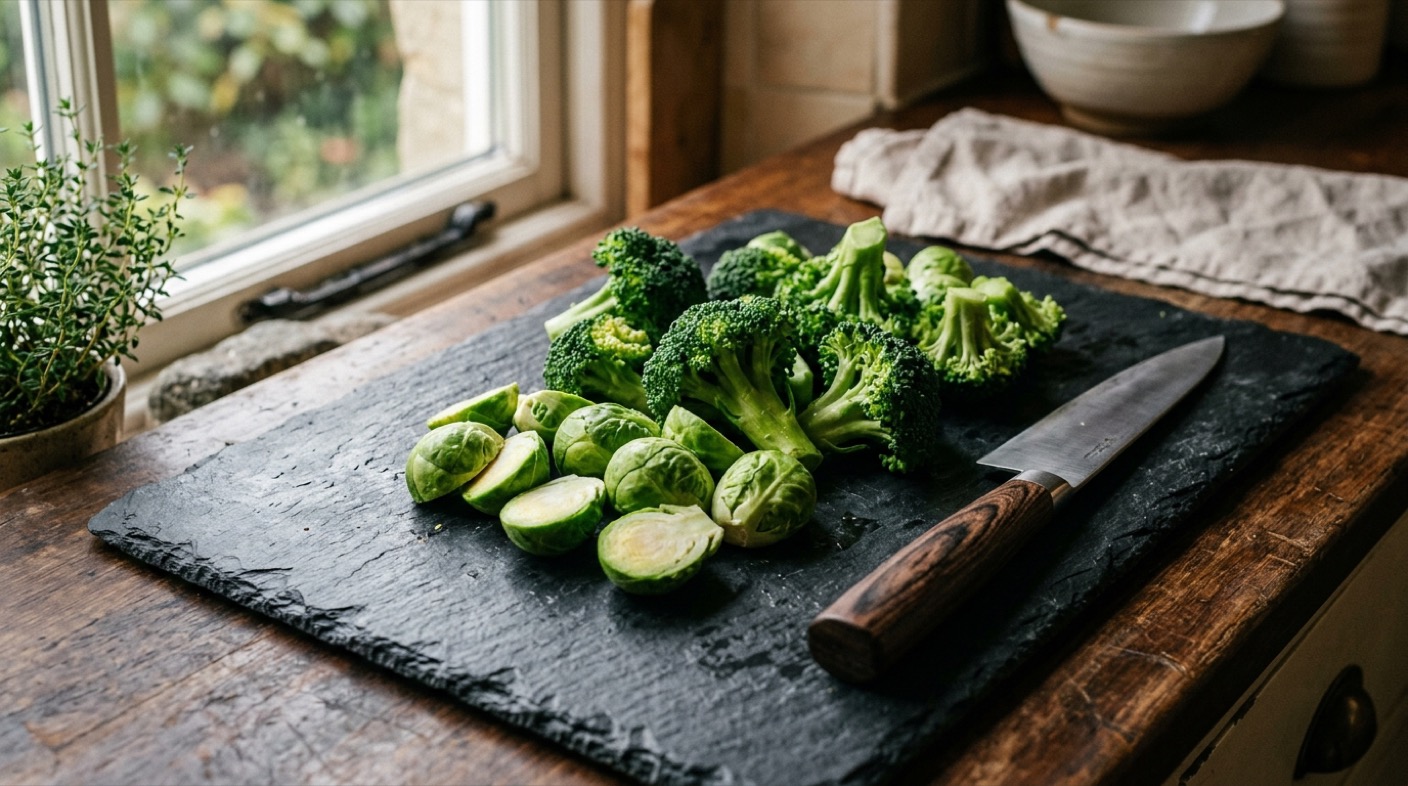
Clinical DIM dosing typically ranges from 100 to 300mg/day, and the self-supplementing cohort likely fell in this range. Cruciferous vegetables (broccoli, Brussels sprouts, cauliflower, cabbage, kale) provide indole-3-carbinol, but reaching clinical doses through food alone is impractical. Supplements often use BR-DIM (Bioresponse), an absorption-enhanced form common in clinical trials.
What to check
DIM is generally classified as a safe dietary supplement, but it can interact with thyroid medication (levothyroxine), anticoagulants (warfarin), and tamoxifen. It inhibits CYP3A4, which can affect the blood concentration of co-administered drugs. Anyone on HRT or other prescription medications should consult their prescribing physician before starting DIM. As supplement and pharmacy lines blur, the “safe complementary” label needs personal-context review.
What’s next
Personalized HRT is moving toward DUTCH-test-driven metabolic profiling, with DIM, calcium D-glucarate, and similar compounds layered as protective adjuncts. The 1,458-person database analysis is the first human validation of this layered approach. Whether follow-up randomized trials reproduce the metabolite shift will determine how mainstream this strategy becomes.