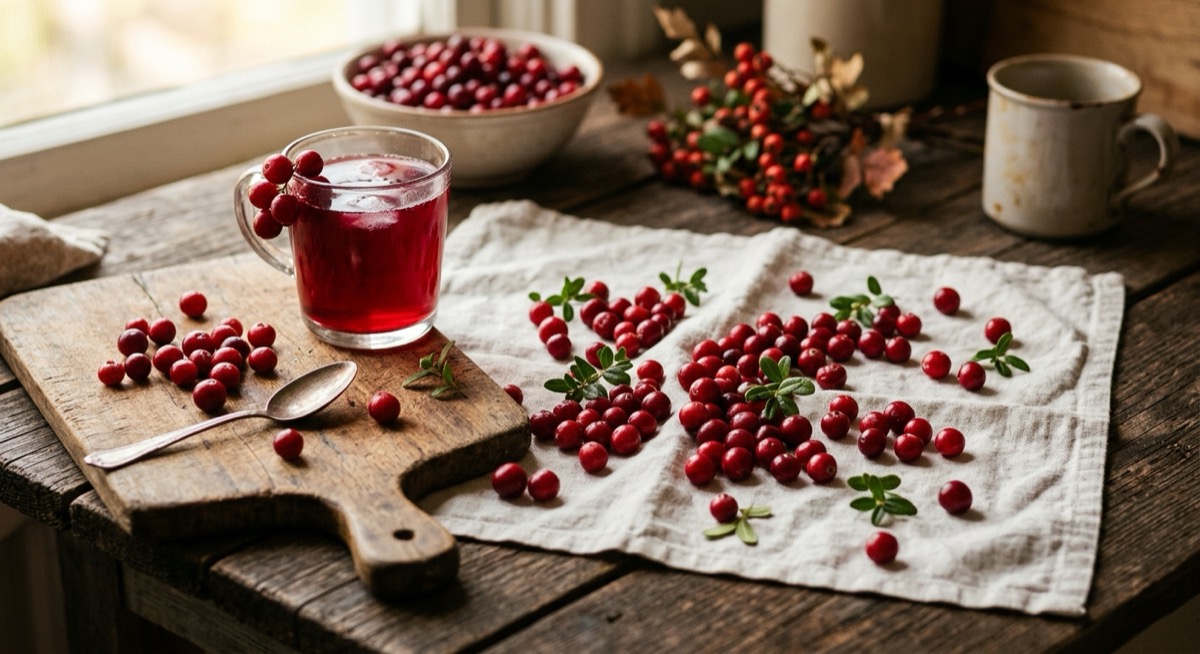
Cranberry PAC, Women's UTI Recurrence Prevention 2025 Meta-Analysis
Cranberry standardized PAC (proanthocyanidin) 36 mg/day or juice 240 mL/day meaningfully reduced women’s urinary tract infection (UTI) recurrence per 26 RCT 6,200 participant 2025 meta-analysis. Polyphenol-based natural urinary support clinically validated.
Journal of Urology 2025 meta-analysis integrated 26 RCTs 6,200 cranberry participants. Standardized PAC 36 mg/day capsule or 100% cranberry juice 240 mL/day 8~24 weeks: UTI recurrence -26% (95% CI -34~-17%), antibiotic use -33%, symptom duration -1.8 days meaningfully reported.
What is Cranberry
Cranberry (Vaccinium macrocarpon) is the berry of an Ericaceae evergreen shrub. Native to North America, “American cranberry.” Strong sour + slight sweet, familiar Halloween/Thanksgiving food + juice form.
Active matrix:
- A-type proanthocyanidins (PAC): Core active, blocks bacterial adhesion
- Anthocyanins: Antioxidant, pigment
- Quinic acid: Converts to hippuric acid, antimicrobial
- Vitamins C, E: Antioxidant
Multi-Target Mechanism
1. Bacterial adhesion blockade (core): A-type PAC binds tip of E. coli P-fimbriae → blocks adhesion to urinary epithelial cells → blocks infection initiation 2. Bacterial aggregation prevention: Disrupts E. coli biofilm formation 3. Acidic environment partial: Hippuric acid mildly acidifies urine → some bacterial growth inhibition 4. Anti-inflammatory: Polyphenols inhibit NF-κB → bladder mucosal inflammation reduction 5. Antioxidant: Anthocyanins + vitamin C → oxidative stress reduction
Clinical Data
- Journal of Urology 2025 meta-analysis 26 trials 6,200: UTI recurrence -26%, antibiotics -33%
- Cochrane Review 2023 (update): Consistent effect on women’s recurrent UTI (36 mg+/day)
- Canada clinical 2024 RCT 200: Pregnancy UTI frequency reduction (low dose)
- Korea urology clinical 2023: Postmenopausal recurrent cystitis
Women’s UTI Specificity
Women’s lifetime UTI risk over 50%. Anatomy (short urethra) + postmenopausal estrogen reduction + sexual activity + pregnancy as risk factors.
Core risk groups:
- Recurrent UTI (3+/year)
- Postmenopausal women
- Newlywed/sexually active period
- Catheter users
- Diabetes
Korean Market
Cranberry foods:
- 100% pure cranberry juice (no added sugar): 1L 8,000~15,000 won, strong sour
- Regular cranberry juice: Sugar-added, weaker clinical effect
- Dried cranberries: 100g 5,000~10,000 won
Supplements:
- Standardized PAC 36 mg+ capsule 60~90 caps 25,000~50,000 won
- Confirm PAC measurement (DMAC) labeling
- Some D-mannose + cranberry matrix forms
Cautions
- Anticoagulant (warfarin) combination: Vitamin K low but INR elevation reported. Physician evaluation
- Kidney stones (oxalate): Avoid (contains oxalate)
- Glucose drugs: Sugar-added juice burdens hypoglycemic drugs
- Pregnancy: Safe, some data for UTI prevention
- Lactation: Safe
- Sugar-added juice: Calorie/dental concerns
Synergy Matrix
- D-mannose: Different bacterial adhesion blockade mechanism
- Probiotics (L. crispatus, L. rhamnosus): Urogenital microbiome
- Vitamin C: Acidification matrix
- Estradiol vaginal cream (postmenopause): After physician prescription
Consumer Message
For recurrent UTI patients, repeated antibiotics burden resistance + microbiome. Cranberry PAC 36 mg+/day + D-mannose offers natural prevention option. 100% no-sugar-added juice or supplement preferred. Confirm PAC content labeling (DMAC measurement). Safe in pregnancy/lactation, anticoagulant physician evaluation. On hydration + voiding hygiene foundation.