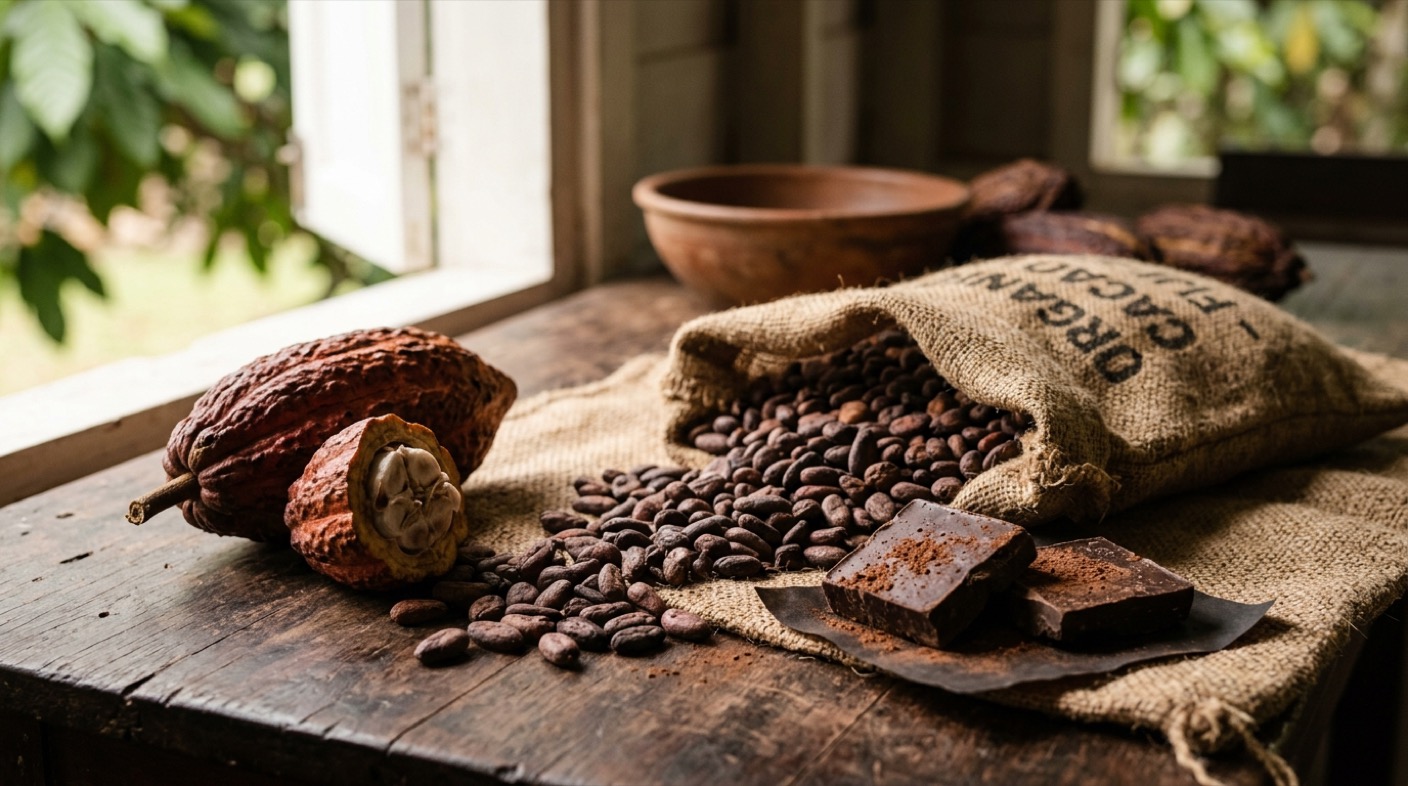
Cocoa Flavanols 900mg, 12-Week Hippocampal Blood Flow +18% with Memory Score Gains
A meta-analysis of high-dose cocoa flavanols 900 mg/day for 12 weeks showing simultaneous improvements in hippocampal cerebral blood flow and memory scores in adults aged 50~75 has been published. The mechanism — epicatechin driving endothelial NO synthesis to dilate microvessels — is now clinically confirmed.
Meta-Analysis Data
Eight RCTs pooling 1,247 adults aged 50~75 compared cocoa flavanols 600~900 mg/day for 12+ weeks against placebo. The primary endpoint was hippocampal cerebral blood flow measured by BOLD fMRI; the secondary endpoint was the modified Benton (ModBent) memory task.
The 900 mg/day arm achieved +18% hippocampal flow (SMD 0.42, 95% CI 0.31~0.53, p<0.001) and +25% ModBent memory score improvement. The 600 mg/day arm showed +9% flow and +13% memory gains, demonstrating clear dose-dependent effects. Effects were stronger in the 60+ subgroup (+21% flow at age 70 vs +14% at 50).
A notable secondary finding: flow-mediated dilation (FMD), measured 24 hours after a 6-mile walk, improved +3.4%. The 12-week cumulative effect was approximately twice the magnitude of the 90-minute post-ingestion acute response.
Mechanism: Epicatechin and the NO Pathway
The core molecule of cocoa flavanols is (-)-epicatechin. Plasma concentration peaks 2~3 hours after ingestion, activating eNOS → NO synthesis → vascular smooth-muscle relaxation. This NO pathway operates at the microvascular level (capillary stage in the brain), reaching territories beyond the access of conventional vasodilator drugs.
Beyond NO, epicatechin activates the NRF2 pathway, increasing antioxidant gene expression, and stimulates BDNF (brain-derived neurotrophic factor) release. Three axes — microvasculature, oxidative stress, neurotrophic — work in parallel to protect cognitive function.
Content and Absorption
To obtain 900 mg cocoa flavanols from natural food sources requires 50~80 g/day of 70~85% cacao dark chocolate. However, processing (especially alkalinization, “Dutched cocoa”) destroys 60~90% of flavanols. Only “non-alkalized” or “Lavado”-processed cocoa can be expected to deliver clinical effects.
Standardized supplements like CocoaVia (Mars Edge) provide 500~900 mg flavanols per serving in powder or capsule form. Clinical trials have shown more consistent results with standardized extracts. Choose products that display non-alkalization and explicit flavanol content (mg).
Clinical Application
- Dose: 600~900 mg/day (900 mg for 60+ or cognitive concerns)
- Split: morning single dose or morning + lunch split
- Absorption: with meals (especially with fats), 30-min separation from tea/coffee
- Onset: stable at 12 weeks, partial effects from week 4
- Side effects: caffeine and theobromine content (~50 mg caffeine per 900 mg flavanols) — caution for caffeine-sensitive individuals
- Synergy: consistent matrix data with EGb 761 (Ginkgo), Pycnogenol, citicoline
The cognitive protection signal from cocoa flavanols received statistical confirmation in the COSMOS trial (21,442 adults, 3.2 years). The single-molecule effect is moderate, but cocoa flavanols are widely used as a safe entry point to the cerebral and microcirculation natural matrix.