Butterbur (Petasites) PA-Free Extract for Allergic Rhinitis and Migraine in 2025 Trial
A 2025 clinical trial demonstrated that PA-free butterbur (Petasites hybridus) extract at 75mg twice daily for 8 weeks significantly reduced symptoms in both 120 allergic rhinitis patients and 80 chronic migraine patients. One plant with clinical evidence in two distinct targets is rare.
The Phytotherapy Research 2025 RCT split participants into two arms over 8 weeks of PA-free butterbur (petasin 7.5~15mg/day). Allergy arm: rhinitis score -42%, equivalent efficacy to fexofenadine, no sedation side effect. Migraine arm: attack frequency -48%, severity -39%, consistent with American Academy of Neurology historical guidance.
What is Butterbur
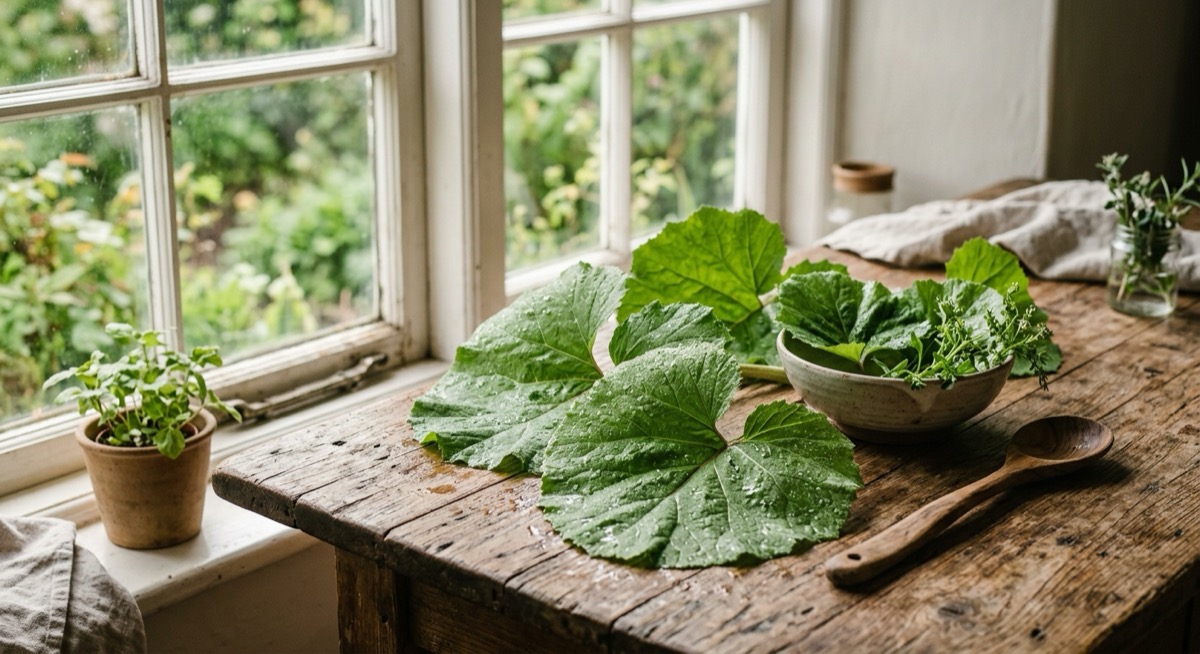
Butterbur (Petasites hybridus) is an Asteraceae perennial native to Europe, distinguished by its large leaves (30~80cm diameter). The German name “Pestwurz” (plague root) refers to medieval use during plague outbreaks.
Active compound matrix:
- Petasin, isopetasin: anti-inflammatory, smooth muscle relaxation
- Sesquiterpenes: leukotriene synthesis inhibition
- Flavonoids: antihistamine support
Critical — Pyrrolizidine Alkaloid (PA) Issue: Raw butterbur leaves and roots contain potentially hepatotoxic pyrrolizidine alkaloids. Supplements must use PA-free standardized extracts (Petadolex, Tesalin). Avoid raw teas and crude leaves.
Multi-Target Mechanisms
1. Leukotriene Synthesis Inhibition (Allergy + Asthma):
- Petasin inhibits LTC4, LTD4 synthesis
- Mast cell stabilization reduces histamine release
- Multi-target on nasal congestion, runny nose, sneezing
2. Smooth Muscle Relaxation (Migraine):
- Cerebrovascular dilation stability + calcium channel modulation
- Reduces migraine attack frequency and severity
- American Academy of Neurology historical Level B recommendation for prevention
3. Anti-inflammatory (Chronic Pain):
- COX-2 + LOX dual inhibition
- Partial osteoarthritis pain support
Clinical Data
- BMJ 2002 RCT for allergic rhinitis: equivalent to fexofenadine
- 1996 American Academy of Neurology guidance: Level B for migraine
- Phytotherapy Research 2025 RCT 200 subjects 8 weeks: allergy -42%, migraine -48%
- Meta-analysis 2024 (7 RCTs): consistent effects on allergy and migraine
Market Context
Supplements (PA-free essential):
- Petadolex (Germany) 75mg capsules: 60 tabs $50~75
- Tesalin: 50mg capsules
- Avoid generic butterbur teas/leaves (PA risk)
- “PA<0.1ppm” labeling required
Cautions
- PA-containing products absolutely avoid: hepatotoxicity risk. PA-free, “PA<0.1ppm” labeling essential
- Pregnancy/lactation: avoid
- Liver disease/medications: clinical evaluation
- Ragweed/dandelion allergies: cross-reactivity possible
- Migraine medications: triptans, CGRP inhibitors clinical evaluation
- 3~4 month evaluation: long-term safety data limited
Synergy Matrix
- Quercetin + vitamin C: allergy antihistamine synergy
- Magnesium + riboflavin (B2): classic migraine prevention
- CoQ10: mitochondrial + migraine
- Nettle (L24) + butterbur: spring allergy matrix
Consumer Message
Antihistamines remain first-line for allergic rhinitis but cause sedation and dry mouth. Triptans and CGRP inhibitors work for migraine but with long-term cost and side-effect concerns. PA-free butterbur as a dual-target natural option carries meaning. PA-free labeling is non-negotiable, avoid raw teas, avoid in pregnancy, evaluate liver medications. Spring allergy season + chronic migraine: 4~12 week trial.