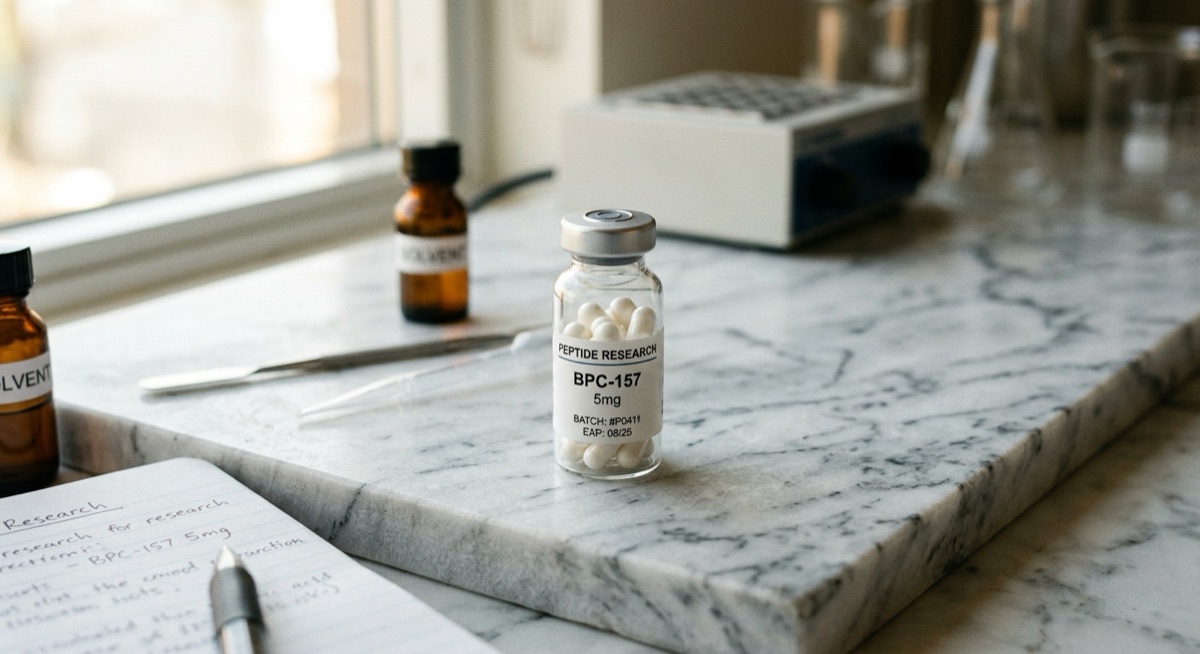
BPC-157 Peptide: Emerging Adjunct for Gut Healing and IBD — Strong Animal Data, Sparse Human RCTs
The category of mucosal repair peptides is drawing renewed clinical attention. The American College of Gastroenterology (ACG) 2025 presentation summarized the possibility of BPC-157 (15-amino acid synthetic gastric protective peptide) emerging as a new adjunct option for inflammatory bowel disease (IBD). The balanced evaluation noted strong animal model data alongside the absence of large human RCTs.
BPC-157 is a 15-amino acid peptide isolated from the body protection compound (BPC) found in human gastric secretions. Since identification in the 1990s, multi-layer recovery effects have accumulated in animal experiments.
Animal Model Data
- NSAID gastritis: accelerated mucosal erosion·ulcer recovery
- Alcohol mucosal damage: gastric·esophageal mucosal protection
- DSS ulcerative colitis model: intestinal mucosal recovery, inflammation reduction
- Crohn’s model: mucosal thickness·tight junction protein recovery
- Post-surgical fistula·anastomosis sites: accelerated recovery
- Cartilage·ligament·bone injury: recovery signal stimulation
- Nerve injury: partial recovery data
Mechanism Circuits
- Angiogenesis: VEGF·NO signaling stimulates blood flow recovery in damaged areas
- Increased growth hormone receptor expression: strengthens tissue recovery signaling
- Anti-inflammation: reduces TNF-α, IL-6, IL-1β
- Intestinal mucosal tight junctions: increases claudin·occludin expression to prevent leaky gut
- Antioxidation: ROS neutralization + endogenous antioxidant system stimulation
- Neurotransmission: partial effects on dopamine·serotonin signaling (gut-brain axis)
Limitations of Clinical Data
Clearly noted in the ACG 2025 presentation:
- Animal data is rich and consistent
- Human trials are mostly small safety studies (n=10~50 level)
- Large randomized controlled trials (n=200+, placebo-controlled) absent
- Standard indication·dose·treatment duration guidelines absent
- Long-term safety (1 year+) data limited
Current Clinical Application
US market:
- Compounding pharmacy supply restricted since 2024 (FDA regulation tightening)
- Legal as research chemical
- Not in prescription or OTC supplement category
- Off-label use in specialty clinics under personal responsibility
Administration forms:
- Oral capsule: 250~500μg daily between meals
- Subcutaneous injection: 250~500μg daily near injury site
- Topical: intended for direct GI tract action
Suggested Clinical Areas
- UC·Crohn’s adjunct: review as adjunct in patients with insufficient response to standard drugs (mesalamine, budesonide, TNF-α blockers). Not monotherapy.
- NSAID·aspirin user gastritis prevention: with PPI or in PPI-burden patients
- Post-surgical recovery: GI surgery, orthopedic surgery recovery support
- Suspected leaky gut patients: autoimmune, chronic allergy, chronic fatigue comorbidity
- Exercise recovery: post-ligament·muscle injury recovery acceleration
Side Effects·Cautions
Small trials show no safety signals. But:
- Long-term safety data lacking
- Possible immune stimulation (caution in autoimmune patients)
- Not used in pregnancy·lactation
- Drug interaction data lacking
- Standardized quality control absent (large quality variation between manufacturers)
Position in Korean Market
Korean MFDS does not recognize BPC-157 as pharmaceutical or functional food. Some medical institutions report clinical trial or off-label use, but not a general pharmaceutical category. Some patients use under personal responsibility through research or overseas direct purchase. Commercialization or standard prescription requires additional clinical·regulatory steps.
Natural Matrix Alternative
Natural circuits to review before pursuing BPC-157:
- Glutamine 5~15g/day: main energy source for intestinal mucosal cells. Accumulating intestinal recovery clinical data
- Collagen peptides 10~20g/day: substrate for intestinal mucosal protein synthesis
- L-carnosine·zinc carnosine 75~150mg: H. pylori, gastritis, esophagitis trials
- Butyrate (or butyrate-producing strains): SCFA circuit
- Colostrum 1~3g: immunoglobulins + growth factors
- Curcumin (nano form): NF-κB blockade reduces gut inflammation
- Omega-3 1,000~2,000mg: chronic inflammation attenuation
- Fiber + fermented foods: microbiome circuit
This natural matrix is the circuit reviewed before standard drugs + BPC-157. BPC-157 is settling into the position of an investigational option for patients with insufficient recovery on standard drugs + natural matrix. Attractive data is accumulating, but currently the absence of human RCTs requires clear awareness and cautious use.