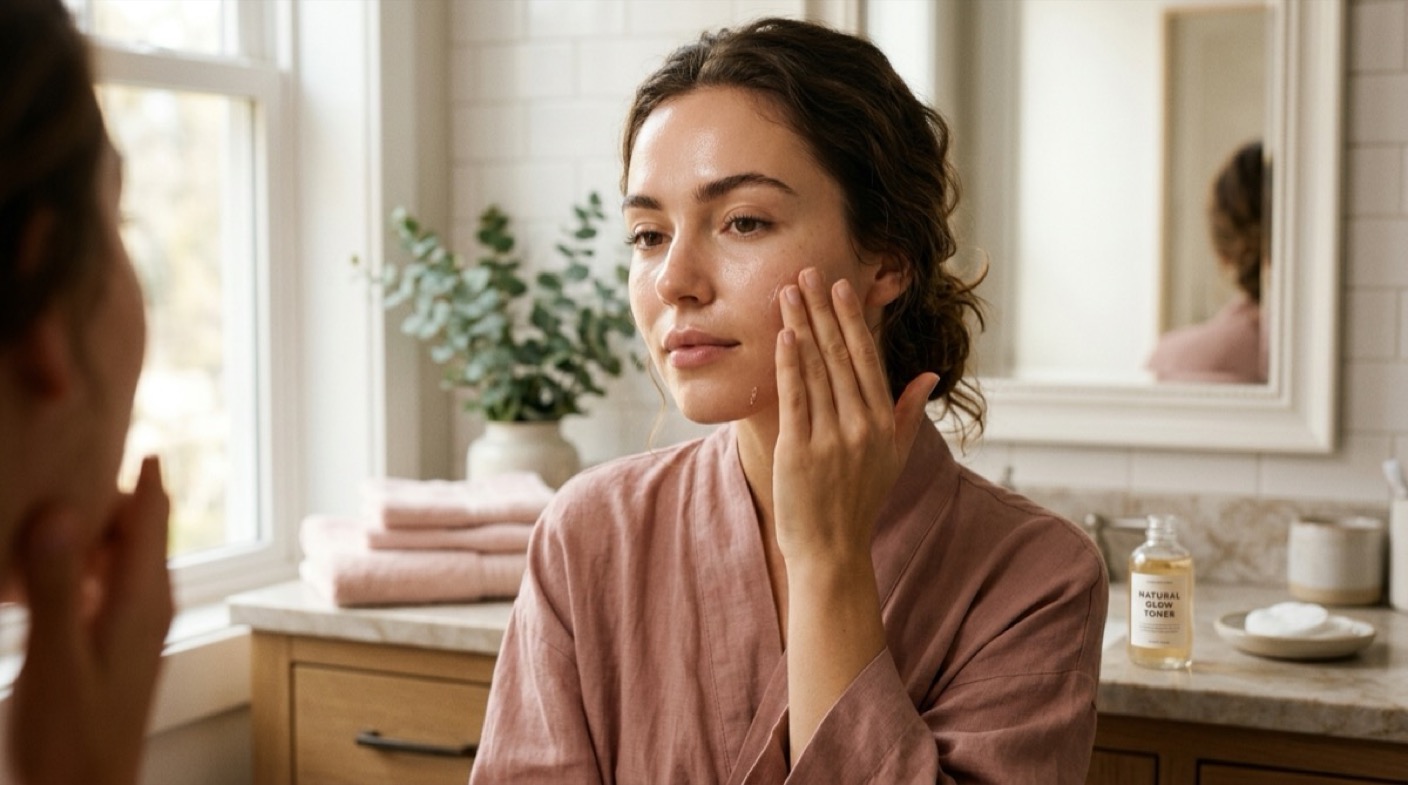
K-Beauty Moves from Glass Skin to Bloom Skin
K-beauty has always moved in waves. One aesthetic peaks, then the next cycle pushes toward something different. Glass skin followed that pattern perfectly: mirror-like reflectivity, pore-erasing smoothness, a finish that looked better in photos than in real life. For a few years, it defined what “good skin” looked like.
In 2026, that definition is shifting.
What Bloom Skin Actually Means
Bloom skin is closer to health than gloss. It describes skin that is well-hydrated, has a strong skin barrier (the outermost layer that locks in moisture and keeps irritants out), and shows an even, balanced tone, producing a luminosity that comes from within rather than from highlighter or filters.
Integrated facialist April Brodie frames it this way: “Radiant skin is created through barrier health, consistency, and discipline, not quick fixes.”
Where glass skin asked “how does it look?”, bloom skin asks “why does it look that way?” The answer lives in the routine and the underlying state of skin, not in a single product moment.
Three Foundations
The routine behind bloom skin is not complicated. It runs on three pillars.
Hydration layering is distinctly K-beauty. Instead of one dense moisturizer, you apply multiple thin layers of lightweight toner, letting each layer absorb before adding the next. Moisture reaches deeper into the skin, and the barrier builds gradually. Two to three passes is standard.
Gentle exfoliation focuses on cell turnover without damage. High-grit scrubs are out. Low-concentration AHAs (alpha hydroxy acids like glycolic acid that dissolve dead surface cells) or BHAs (beta hydroxy acids like salicylic acid that clear congestion inside pores), or enzyme cleansers, do the work without stripping the barrier. Over-exfoliating weakens the very thing bloom skin is trying to build.
Barrier-repair ingredients complete the approach. Ceramides (lipid molecules that form the structural matrix of the skin barrier), centella asiatica (a plant extract that calms inflammation and supports skin repair), and PDRN (polydeoxyribonucleotide, a cell-regenerating compound derived from salmon DNA) each support the skin’s own recovery process. These are not quick-fix ingredients. They compound over weeks.
Brodie keeps the entry point simple: “Start with the essentials: cleanse gently, hydrate deeply, treat intentionally, and protect daily.”
Products Worth Knowing
The products most commonly associated with bloom skin routines cover these three pillars in concentrated form.
Medicube PDRN Pink Cica Soothing Toner ($33) pairs PDRN with cica (centella extract) to address barrier repair and hydration simultaneously. Skin1004 Madagascar Centella Toning Toner ($22.99) leads with 100% Madagascar centella and is designed specifically for hydration layering.
For more targeted care, Dr.nineteen PoreXsome V.Peptox Jelly Toner ($39.95) adds a peptide focus, while Medicube PDRN Pink Collagen Toning Gel Toner Pad ($35) handles toning and gentle exfoliation in one step. The pad format is practical for anyone looking to simplify without dropping either step.
Where K-Beauty Is Headed in 2026
Bloom skin sits inside a larger movement. Across 2026, K-beauty is accelerating toward a convergence of skin science and technology: biotech actives (lab-engineered compounds designed to target specific skin biology), AI-powered skin analysis that personalizes routines in real time, non-invasive preventative treatments (approaches that slow skin aging without needles or procedures), sustainability-driven formulas, and holistic care that includes scalp health alongside facial routines.
The common thread is a shift from surface performance to root cause. Glass skin optimized for appearance. What K-beauty is arguing now is that if the barrier is healthy, if moisture is retained, if the skin is given time and the right inputs, the glow takes care of itself.
That is the premise bloom skin is built on.
What’s the biggest difference between bloom skin and glass skin?
Glass skin focuses on mirror-like reflective shine, while bloom skin targets natural luminosity built on barrier health. It prioritizes the process (barrier strengthening, hydration retention) over the visual result.
What are the core steps for bloom skin?
Three pillars: hydration layering (2~3 thin layers of lightweight toner), gentle exfoliation (low-concentration AHA/BHA or enzyme cleansers), and barrier-repair ingredients (ceramides, centella, PDRN).
Any recommended products?
Medicube PDRN Pink Cica Soothing Toner ($33) and Skin1004 Madagascar Centella Toning Toner ($22.99) are frequently cited for barrier strengthening and hydration layering. For more targeted care, Dr.nineteen PoreXsome V.Peptox Jelly Toner ($39.95) adds a peptide dimension.