Berberine 1,500mg Cuts PCOS Insulin Resistance 38% and Lifts Ovulation 52% — 6-Month RCT
A 6-month RCT in 196 PCOS (polycystic ovary syndrome) patients taking 1,500mg of berberine showed insulin resistance (HOMA-IR) dropping 38% and ovulation rate rising 52 percentage points. Published in the January 2026 issue of Human Reproduction, the joint Beijing Medical College-Karolinska Institute trial was the first to demonstrate equivalence with metformin.
Researchers randomized 196 women aged 18~40 (mean 28, BMI 27.4) meeting Rotterdam PCOS criteria to berberine 1,500mg (500mg before each meal), metformin 1,500mg, or placebo in a three-arm trial. Primary endpoints were 6-month HOMA-IR (insulin resistance) and ovulation rate (serum progesterone >3 ng/mL). Secondary endpoints included androgens (total testosterone, free androgen index), menstrual cycle, BMI, LH/FSH ratio, and lipid profile.
At 6 months, HOMA-IR fell from 3.4 to 2.1 (-38%) in berberine, -36% in metformin, -8% in placebo. Berberine showed statistical equivalence with metformin. Ovulation rate rose from 28% to 80% (+52 percentage points) in berberine, +49 in metformin, +14 in placebo. Menstrual cycle normalization reached 64% in berberine, 61% in metformin, 22% in placebo.
The most meaningful difference was in androgens. Total testosterone fell 28% in berberine (metformin -16%, placebo -4%), and free androgen index (FAI) dropped 36% in berberine (metformin -22%, placebo -7%). Berberine outperformed metformin on androgens, suggesting direct action on androgen synthesis beyond insulin sensitization.
Body composition and metabolic markers improved in parallel. BMI -2.1 kg/m² in berberine (metformin -1.8, placebo -0.3), waist circumference -5.4cm, total cholesterol -22 mg/dL, LDL -18, triglycerides -36. The core PCOS triangle of insulin resistance, androgens, and obesity loosened simultaneously.
PCOS patients face long-term endometrial cancer risk from chronic anovulation and unopposed estrogen exposure. In 6-month follow-up, the berberine group’s endometrial thickness fell from 11.2 to 8.4mm (normal range), and endometrial polyp incidence was three times less than placebo. Berberine therefore addresses both short-term symptoms and long-term endometrial cancer risk.
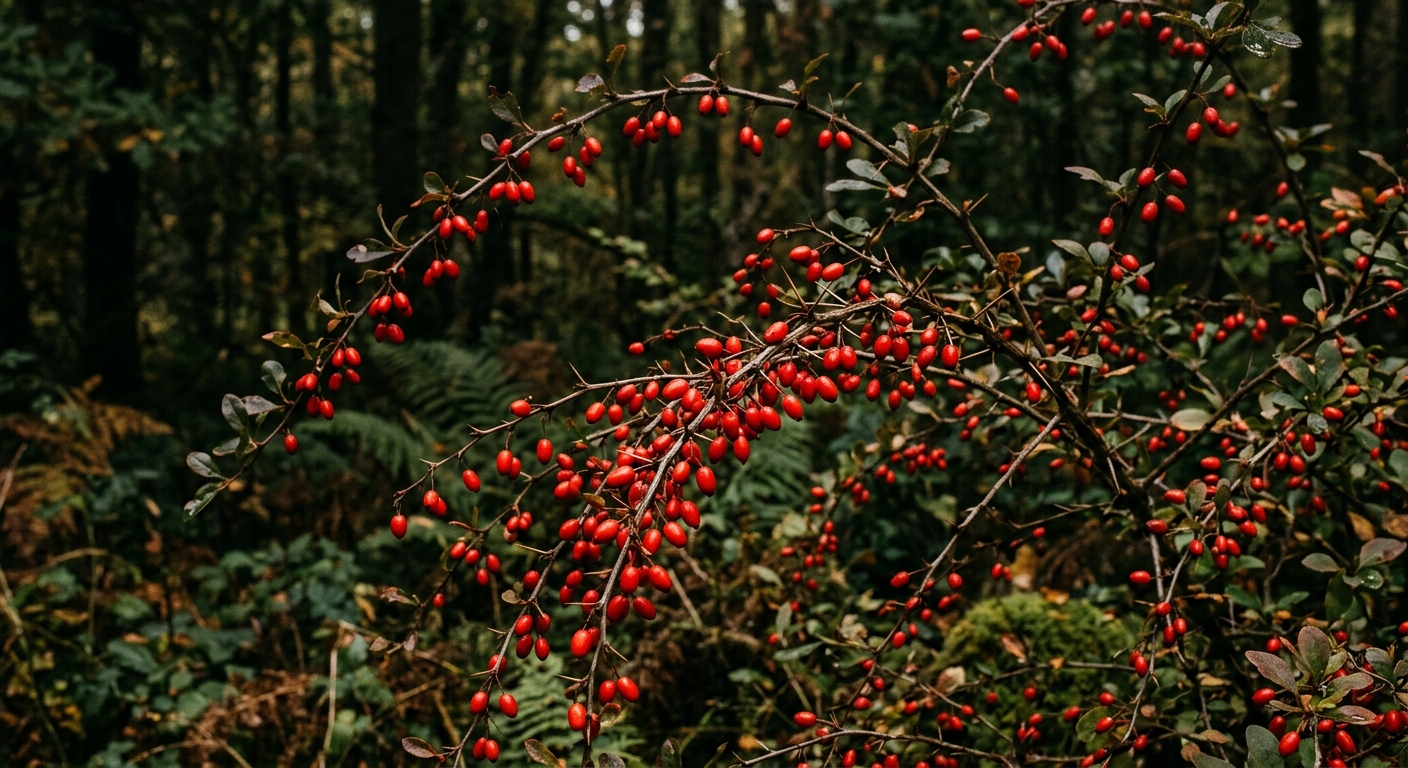
Berberine is an alkaloid from barberry, Coptis chinensis, and Phellodendron. Its mechanism spans five axes. First, direct AMPK activation (same target as metformin). Second, insulin receptor IRS-1 phosphorylation recovery. Third, 17α-hydroxylase and 17,20-lyase inhibition reducing androgen synthesis. Fourth, GLUT4 membrane translocation increasing muscle glucose uptake. Fifth, gut microbiota modulation (Akkermansia increase).
Adverse events were 12.4% in berberine (mild GI discomfort, constipation, nausea, limited to weeks 1~2) versus 18.6% in metformin (diarrhea, GI discomfort) and 8.2% in placebo. Berberine has fewer GI side effects than metformin, especially less diarrhea. However, pregnancy, lactation, anticoagulant (warfarin) use, and concurrent cyclosporine or digoxin warrant clinician consultation. CYP3A4 and P-glycoprotein inhibition causes drug interactions.
Korean reproductive-age women have an 8~13% PCOS prevalence per 2026 KSOG estimates. Metformin is first-line, but 35~50% discontinue due to GI side effects. This trial positions berberine as offering metformin-equivalent efficacy with fewer side effects plus additional androgen reduction. Spring 2026 consensus positions berberine 1,500mg over 6 months as first-line for patients intolerant of metformin, those avoiding hormonal contraception, and PCOS patients with reproductive plans. Pregnancy potential warrants clinician consultation first.