Baicalin from Skullcap Root Blocks Two Skin Inflammation Pathways at Once
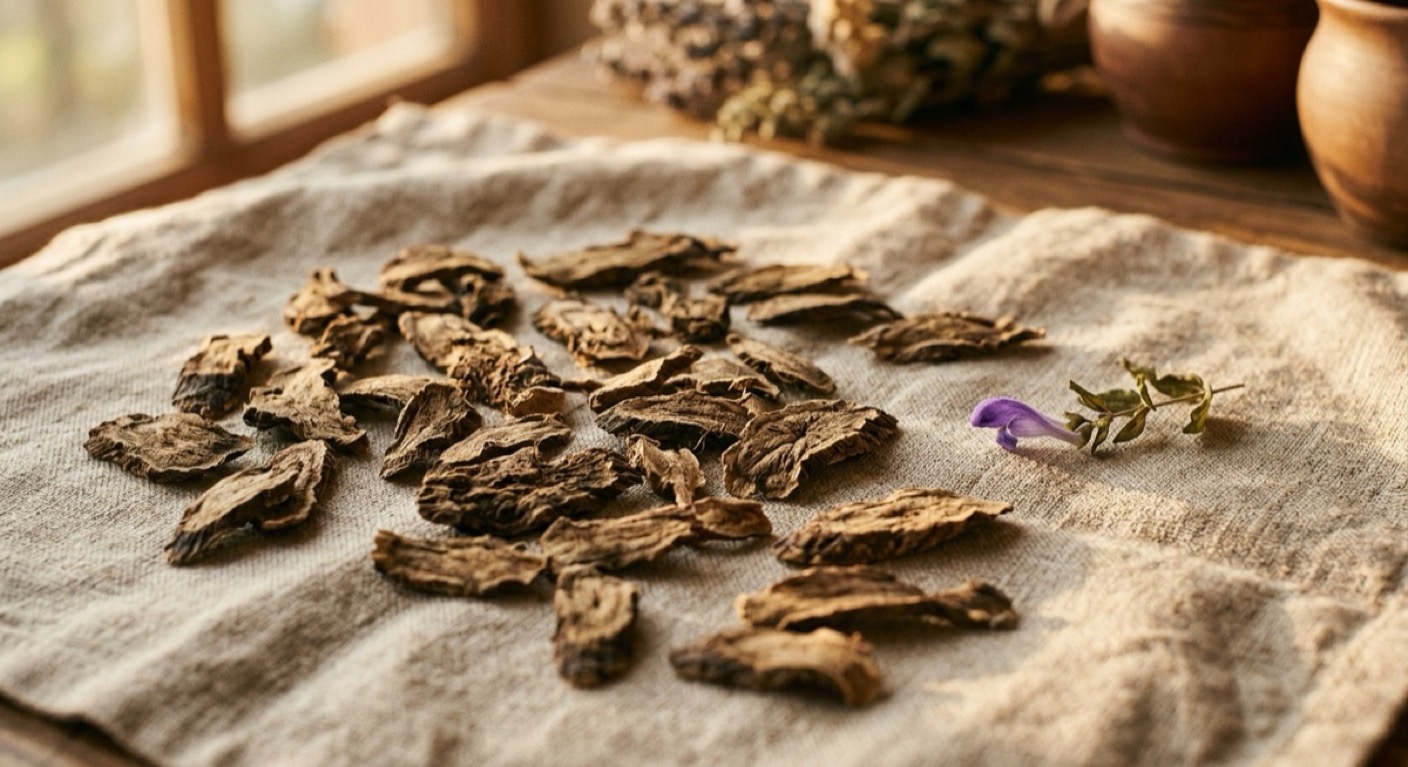
Scutellaria baicalensis, known in traditional East Asian medicine as Huang Qin (黄芩), has been used for centuries to treat inflammation, fever, and liver conditions. What was once understood through clinical observation is now being mapped at the molecular level. A growing body of research shows that the plant’s primary flavonoids block two of the skin’s core inflammatory signaling pathways, while simultaneously reducing the oxidative stress that accelerates visible aging.
Three flavonoids driving the science
The therapeutic activity of Scutellaria baicalensis concentrates in three flavonoids: baicalin, baicalein, and wogonin.
Baicalin is the most abundant, accounting for up to 8 to 15 percent of the root’s dry weight. It is a glycoside, meaning it is bound to a sugar molecule in its natural form. Baicalein is the aglycone, the free form that results when the sugar is cleaved. Without the sugar attachment, baicalein crosses cell membranes more readily, making it more bioavailable at the target site. Wogonin, the third primary flavonoid, is receiving attention for its antihistamine properties and possible role in sebum regulation, which connects it directly to oily skin and acne research.
Extraction method matters. Studies comparing alkaline reduced water extraction to standard aqueous extraction found the alkaline method yields up to 8.894 mg/g more baicalein. For formulators and ingredient-conscious consumers, this distinction points to why two products with the same listed ingredient can deliver different results.
Blocking NF-κB and MAPK simultaneously
Skin inflammation is not a single event. It is a cascade, and two signaling pathways sit at the center of it.
NF-κB (nuclear factor kappa B) is a transcription factor that controls the expression of pro-inflammatory genes. When activated, it drives production of cytokines including TNF-α and IL-6, compounds that sustain and amplify the inflammatory response. Inhibiting NF-κB reduces this cytokine output at its source.
MAPK (mitogen-activated protein kinase) is a separate cascade that processes cellular stress signals and translates them into inflammatory responses. It operates in parallel with NF-κB rather than downstream of it.
Baicalin and baicalein inhibit both pathways. Targeting these two routes at the same time provides broader anti-inflammatory coverage than compounds that act on a single pathway. This dual mechanism helps explain why Scutellaria extracts show efficacy across multiple inflammatory skin conditions rather than a narrow subset.
Oxidative stress and the aging connection
Reactive oxygen species (ROS) accumulate in skin cells through UV exposure, air pollution, and metabolic stress. When ROS levels exceed the skin’s natural antioxidant capacity, they activate collagen-degrading enzymes (MMPs), damage cellular DNA, and accelerate the molecular changes associated with premature aging.
Scutellaria flavonoids act as direct ROS scavengers. Research shows they also upregulate endogenous antioxidant enzymes, superoxide dismutase (SOD) and catalase, which are the skin’s own defense mechanisms. Concurrently, they reduce malondialdehyde (MDA), a marker of oxidative lipid damage. The combined effect, direct scavenging plus enzyme upregulation, addresses oxidative stress through two mechanisms rather than one.
Chronic oxidative stress is a common driver of both aging and inflammatory skin conditions. A compound that reduces ROS load while suppressing inflammatory signaling addresses a larger portion of the underlying biology than either function alone.
2025 findings: plant exosomes and oily skin
A 2025 study introduced a new delivery angle for Scutellaria’s activity. Researchers found that plant-derived exosomes from Scutellaria baicalensis, nano-scale vesicles secreted by plant cells, showed therapeutic potential for oily skin disorders. The primary targets were excess sebum production, enlarged pores, and inflammatory acne lesions.
This connects to a parallel development in formulation technology. Nanoencapsulation of baicalin, packaging the active compound inside nano-scale carriers, has been shown to enhance anti-inflammatory efficacy by improving delivery past the skin barrier to the cell layers where the signaling pathways operate. Exosomes represent a naturally occurring version of the same principle.
How to use this in practice
In skincare: Look for Scutellaria Baicalensis Root Extract or Baicalin in the ingredient list. Calming serums, anti-redness ampoules, and acne formulas are the most common product categories. Price range spans roughly $20 to $100+, with entry-level derma brands to premium wellness lines both covering this ingredient.
Oral supplements: Baicalin supplements are available, with research studies typically using 500 to 1000 mg per day. Skullcap tea provides a lower-dose, food-adjacent route to the same flavonoids. Oral intake has stronger evidence for systemic effects including liver protection and antiallergic action; skin effects via oral route are more indirect.
A note on caution: Some individuals report GI sensitivity or skin reactions with Scutellaria extracts. Those on immunosuppressants or during pregnancy should confirm with a healthcare provider before adding it to their routine.
From classical herb to molecular evidence
Scutellaria baicalensis has been in continuous clinical use across East Asia for over two thousand years. The current research cycle is not discovering new properties so much as explaining the mechanisms behind documented effects. NF-κB inhibition, MAPK suppression, antioxidant enzyme activation, and now exosome-mediated delivery, each line of research adds precision to an understanding that practitioners built over centuries through observation.
Sources
MDPI Antioxidants (2025). Anti-skin inflammatory activities of Scutellaria baicalensis flavonoids and alkaline extraction enhancement.