Ubiquinol vs. Ubiquinone: What Sets Them Apart, and Who Benefits Most
Ubiquinol (Coenzyme Q10, Reduced Form)
Ubiquinol is one of two interchangeable forms of CoQ10 — the reduced form that directly participates in mitochondrial energy production and acts as a fat-soluble antioxidant. It absorbs more readily than ubiquinone, but costs more. Age and certain medications are the clearest signals for choosing the more expensive form.
- Category: ingredients, hormone
- Related: mitochondria, menopause, antioxidants, statins
Ubiquinol and Ubiquinone: Two Forms of the Same Molecule
CoQ10 (coenzyme Q10) is not a single fixed substance. Inside the body, it continuously shifts between two states.
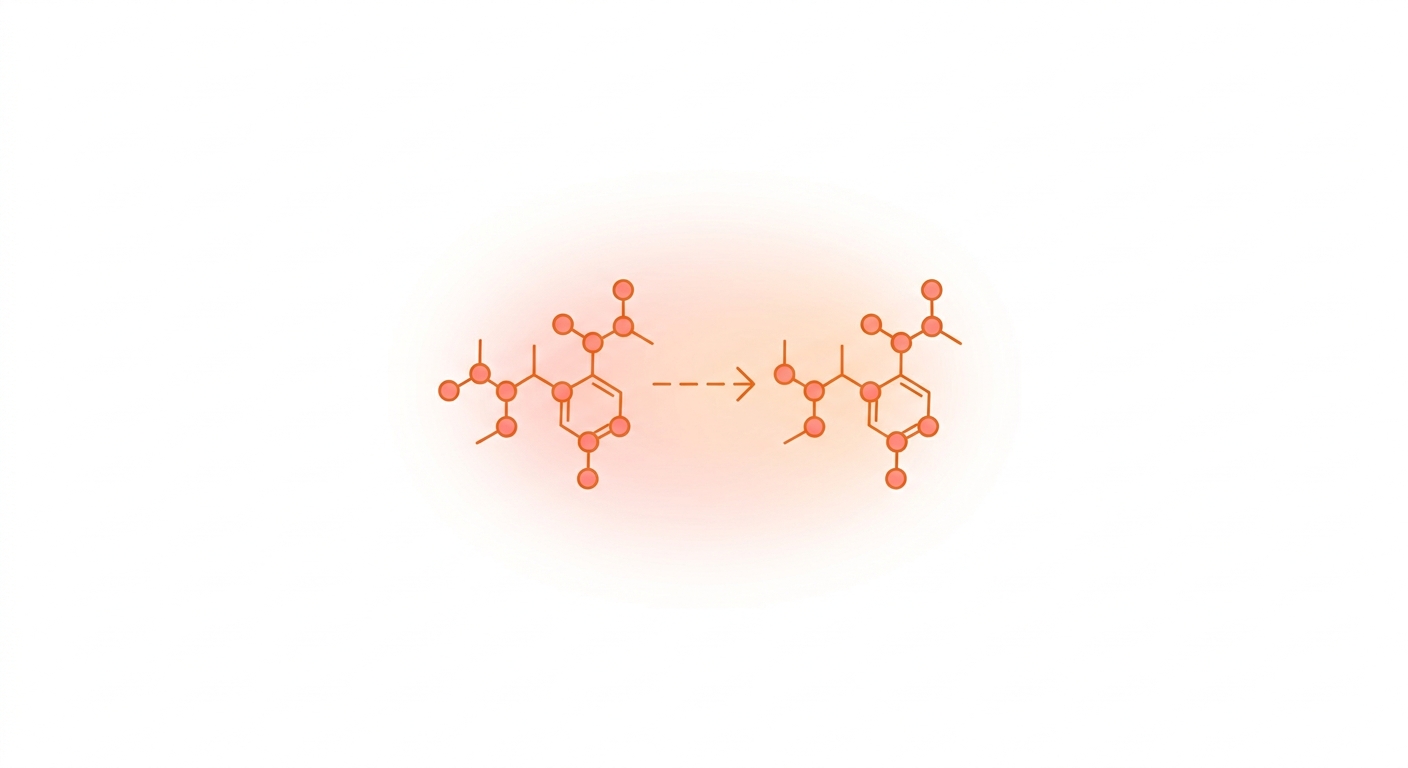
Ubiquinone is the oxidized form — it’s ready to accept electrons in the mitochondrial electron transport chain.
Ubiquinol is the reduced form — it has already accepted two electrons. In this state, it actively transports electrons through the chain and neutralizes free radicals as a fat-soluble antioxidant.
The two forms are a redox pair: ubiquinone accepts electrons to become ubiquinol, and ubiquinol donates electrons to revert to ubiquinone. In a healthy cell, this cycle runs continuously.
What this means for supplementation: roughly 95% of CoQ10 in human blood circulates as ubiquinol. When ubiquinone is taken orally, it must first be converted to ubiquinol before it becomes physiologically active. The efficiency of that conversion varies by age and health status.
What CoQ10 Does in Mitochondria
CoQ10 is embedded in the inner mitochondrial membrane, where the electron transport chain (ETC) operates. The ETC is a series of four protein complexes (I through IV) that transfer electrons step by step to produce ATP, the cell’s primary energy currency.
CoQ10 serves as a mobile electron carrier, shuttling electrons from complexes I and II to complex III. As electrons pass through, protons (H⁺) are pumped across the membrane, building a concentration gradient that drives ATP synthase — the molecular turbine that produces ATP.
Without CoQ10, the electron transport chain stalls. No carrier, no electron flow; no electron flow, no ATP. The muscle fatigue, slower cognitive response, and reduced recovery capacity that accumulate with age have, at the cellular level, a partial explanation here.
Beyond energy production, ubiquinol functions as a fat-soluble antioxidant, protecting cell membranes and LDL particles from oxidative damage. This antioxidant role is performed specifically by the reduced (ubiquinol) form.
Why Conversion Efficiency Drops After 40
A healthy young adult converts ubiquinone to ubiquinol with reasonable efficiency. The process requires adequate reducing equivalents — particularly NADPH — and functional enzymatic activity.
Several factors progressively impair this conversion with age.
Higher oxidative load: As cellular oxidative stress increases, ubiquinol oxidizes back to ubiquinone more quickly. Maintaining the reduced state becomes harder.
Declining mitochondrial function: As mitochondrial number and efficiency fall, the recycling speed of CoQ10 within the electron transport chain slows.
Reduced endogenous synthesis: CoQ10 is synthesized internally via the mevalonate pathway. That synthesis declines with age — tissue measurements suggest CoQ10 concentrations in key organs begin falling in the mid-30s and can drop to half of youthful levels by the 50s and 60s.
The combined result: ubiquinone supplementation may yield less usable CoQ10 than it would in a younger person. The gap between ingested dose and functional CoQ10 level widens.
Absorption Difference
Multiple clinical studies have compared bioavailability of the two forms head-to-head.
A frequently cited trial (Hosoe et al., 2007) compared ubiquinol 300 mg to ubiquinone 300 mg over four weeks. Blood CoQ10 levels in the ubiquinol group rose roughly 8-fold more than in the ubiquinone group — same dose, substantially higher plasma concentration achieved.
The mechanism is structural: ubiquinol is already in its active state when absorbed through the intestinal wall, bypassing the conversion step. Ubiquinone requires reduction after absorption, with efficiency that varies person to person and declines with age.
That said, higher absorption doesn’t automatically mean ubiquinol is the right choice for everyone. If conversion capacity is intact — as it tends to be in younger, healthier individuals — ubiquinone is effective. The absorption advantage of ubiquinol becomes most relevant when conversion is impaired.
Price Difference and Value
Ubiquinol supplements consistently cost more than ubiquinone. Manufacturing ubiquinol requires additional steps to maintain it in the reduced state, and the molecule’s sensitivity to oxidation demands specialized encapsulation and packaging. A quality ubiquinol 100 mg product typically runs 1.5 to 2.5 times the price of a comparable ubiquinone product.
That price premium is most justified in specific situations: over 40 with reduced conversion efficiency, taking a statin that directly suppresses CoQ10 synthesis, or needing a higher effective dose without dramatically increasing the number of capsules.
For someone in their 20s or 30s supplementing for general wellness, ubiquinone at 100 mg is a practical starting point. The premium isn’t yet warranted unless there’s a specific clinical reason.
Menopause and Ubiquinol
Perimenopause and menopause represent a convergence of stressors at the mitochondrial level. Declining estrogen is associated with reduced mitochondrial biogenesis and increased oxidative stress in multiple tissues. The fatigue, sleep fragmentation, and cognitive fog that characterize this transition reflect, at least in part, declining cellular energy production efficiency.
A double-blind randomized controlled trial conducted in Iran (2020) examined ubiquinol 200 mg daily over eight weeks in 60 menopausal women. The ubiquinol group showed significant improvement in self-reported fatigue scores and reductions in oxidative stress markers (malondialdehyde, 8-isoprostane) compared to placebo. Vasomotor symptoms (hot flashes, night sweats) also decreased, though this finding was exploratory.
The trial was small and relied partly on self-report, so these findings should not be read as evidence for treating menopause symptoms. However, the mechanistic logic — mitochondrial support and oxidative stress reduction during a period when both are under pressure — holds up to scrutiny.
For those in perimenopause or menopause considering CoQ10, ubiquinol 100–200 mg aligns with available evidence. Review any current supplements or medications for interactions before adding it.
Statins and CoQ10
Statins lower cholesterol by inhibiting HMG-CoA reductase, the enzyme that controls the rate-limiting step in cholesterol synthesis. The same mevalonate pathway that produces cholesterol also produces CoQ10.
Blocking HMG-CoA reductase therefore suppresses CoQ10 synthesis as a secondary effect. Multiple studies document blood CoQ10 concentrations dropping 30–50% within weeks of starting statin therapy. The muscle pain (myopathy), fatigue, and weakness that some statin users experience may be partly explained by this CoQ10 depletion.
The clinical picture is complicated: meta-analyses on whether CoQ10 supplementation reliably improves statin-induced muscle symptoms have returned mixed results (including a 2018 Cochrane review). The depletion of CoQ10 by statins is well-documented; the therapeutic response to supplementation remains inconsistent across studies.
In practical terms: if you take a statin and are experiencing muscle-related side effects, discuss CoQ10 supplementation with your prescribing physician rather than adjusting medication independently. For statin users who want to proactively address CoQ10 depletion, ubiquinol’s direct bioavailability makes it the more logical form.
Dietary CoQ10: What Food Can and Can’t Do
CoQ10 is present in food, most concentrated in high-energy tissues.
| Food | CoQ10 per 100g (mg) |
|---|---|
| Beef heart | 11–13 |
| Sardines (canned) | 4–7 |
| Mackerel | 4–5 |
| Beef (regular cut) | 2–4 |
| Broccoli | 0.6–0.9 |
| Egg | 0.1–0.2 |
Reaching 100–200 mg daily from food alone would require eating several hundred grams of organ meat or oily fish every day. Diet can maintain a CoQ10 baseline, but it cannot realistically compensate for statin-induced depletion or age-related decline to supplemental levels.
CoQ10 is fat-soluble, so absorption from both food and supplements improves when consumed with a fat-containing meal. This applies equally to ubiquinol and ubiquinone supplements.
Warfarin and Anticoagulants
CoQ10 shares structural similarities with vitamin K2 and has been reported in case series to reduce warfarin’s anticoagulant effect. Patients on warfarin who added CoQ10 showed decreases in INR (international normalized ratio, a measure of blood clotting time) in several documented cases.
The mechanistic evidence for this interaction remains limited, but the clinical risk is real enough to warrant caution. Anyone on warfarin should inform their doctor before starting CoQ10, and INR monitoring should be maintained throughout.
Data on CoQ10 interactions with newer anticoagulants (apixaban, rivaroxaban, and other DOACs) is sparse. The same precaution applies: consult your prescribing physician.
Related Terms
- Mitochondria: The organelle responsible for ATP production, where CoQ10 operates as an electron carrier within the inner membrane
- Menopause: The 10-year window around the final menstrual period, marked by declining estrogen and increased mitochondrial stress
- Antioxidant: A molecule that neutralizes reactive oxygen species before they damage cellular structures; ubiquinol performs this role specifically within fat-soluble environments
FAQ
Ubiquinol or ubiquinone — which should I choose? If you’re under 40 and generally healthy, ubiquinone is a reasonable starting point. If you’re 40 or older, taking statin medication, or navigating menopause, ubiquinol offers a clear absorption advantage. Since ubiquinol costs more, knowing your situation first makes the choice straightforward.
Can I get enough CoQ10 from food alone? Foods like sardines, mackerel, beef heart, and broccoli contain CoQ10, but reaching supplement-level intake from diet would require very large daily portions of organ meats or oily fish. Dietary intake can help maintain a baseline, but it’s not realistic as a substitute for supplemental CoQ10 when specific needs apply.
I take warfarin. Is it safe to add a CoQ10 supplement? CoQ10 has been reported to reduce warfarin’s anticoagulant effect in some cases. If you’re on warfarin or any blood thinner, consult your doctor before starting CoQ10 and monitor your INR levels regularly during use.