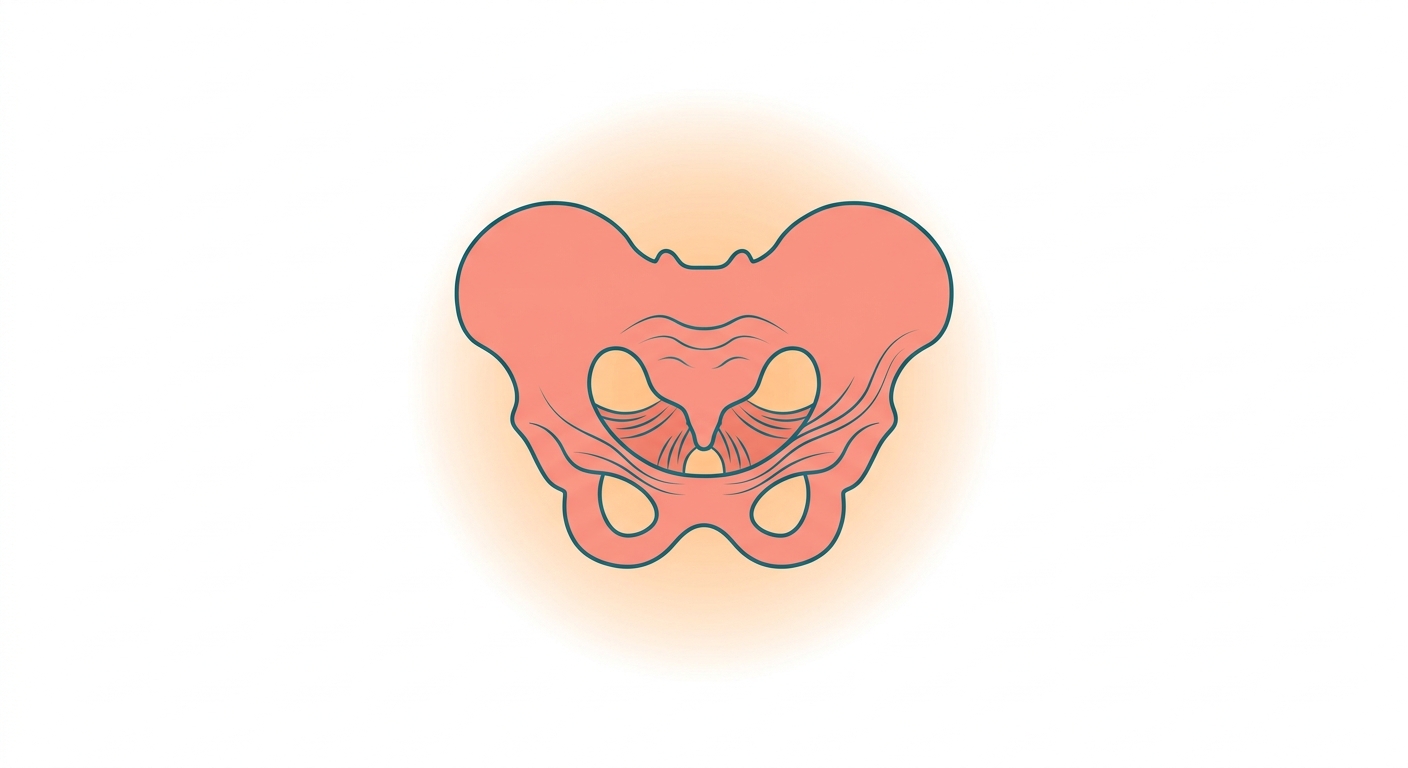
Pelvic Floor Muscles — Women's Blind Spot Organ. Core of Incontinence·POP·Sexual Function
Pelvic Floor Muscles: Complex of muscles·ligaments supporting pelvic bottom. Supports uterus·bladder·rectum, regulates urine·stool·sexual function. 30~40% women damaged but <20% seek treatment — representative blind spot.
Pelvic floor invisible. But daily essential — coughing·exercise·sitting·standing·sex·childbirth all involve it. Childbirth damage lifelong impact, menopausal hormone decline adds weakening. Yet treatment rate <20% — shame and “aging sign” perception created blind spot. L71 Elitone FDA 510(k) OTC launch = first release of this blind spot.
What it is
Pelvic Floor: Pelvic bottom muscle·ligament·fascia complex, between pubis and coccyx, funnel·hammock shape
4 main muscles:
- Pubococcygeus — pubis-coccyx, largest
- Iliococcygeus — ilium-coccyx
- Puborectalis — pubis-rectum, stool control
- Coccygeus — coccyx support
Nerves: Pudendal nerve, pelvic autonomic
Functions - Daily Core
1. Urine·Stool control: Urethra·anal sphincter, conscious·reflex, damage → incontinence
2. Uterus·Bladder·Rectum support: Prevent organ prolapse, damage → POP
3. Sexual function: Vaginal·clitoral sensation, orgasm intensity, sexual pain control
4. Childbirth canal: Fetal passage formation, postpartum recovery
5. Posture·Abdominal pressure: Core part, spine stability
Damage Causes
Childbirth (most common): Vaginal·abdominal both impact, perineal incision·tear, large baby·multiple, labor length
Menopause (estrogen ↓): Collagen ↓, muscle·ligament weakness, mucosal atrophy
Other: Obesity (chronic pressure), chronic constipation·cough, aging, pelvic surgery, exercise deficiency
Symptoms - Blind Spot Signs
Urinary Incontinence:
- Stress: cough·sneeze·exercise (60%)
- Urge: sudden strong urgency (20%)
- Mixed: both (20%)
- Nocturia
Pelvic Organ Prolapse (POP): Vaginal pressure·foreign body sensation, gait discomfort, sexual pain, constipation
Sexual dysfunction: Sexual pain, ↓ orgasm, ↓ vaginal sensation
Constipation·Fecal incontinence: Chronic constipation, rare fecal incontinence
L71 Blind Spot - Clinical Unit Recognition
Women 30~40%: Korea 6~8M Treatment <20%: Shame·“aging sign” perception L71 Elitone OTC: First OTC release
Kegel Exercise - Step 1
Basic Kegel: Conscious pelvic floor muscle contraction·relaxation, daily 10~15 reps × 3 sets, 3~5 sec contraction + 3~5 sec relaxation, free, 8~12 wk onset
↑ effect conditions: Accurate muscle awareness (doctor·PT guidance), consistency (daily), reinforcement (app·device·electrical stim)
Limits: ↓ consistency, ↓ accuracy (other muscles recruited), ↓ effect moderate·severe
Elitone OTC (L71) - Step 2
Elidah Elitone: FDA 510(k) 2026.3.31, OTC (no prescription), external patch, electrotherapy, photobiostimulation, 20~40 min/day, 12-wk program
Kegel + Elitone: Kegel self + Elitone stim adjunct, ↑ consistency, ↑ accuracy, ↑ clinical effect
Drugs - Step 3 (Urge)
Anticholinergics: Detrol (tolterodine), Vesicare (solifenacin), side effects: dry mouth·drowsiness·constipation
β3 agonist: Myrbetriq (mirabegron), ↓ side effects
Stress incontinence: ↓ drug effect → exercise·procedure·surgery
Surgery - Step 4 (Severe)
TVT (Tension-free Vaginal Tape): Sling insertion, stress incontinence, 70~90% effect, mesh-related complications
POP surgery: Hysterectomy if needed, mesh or autologous
Daily Management
Basic: Kegel daily (apps — Squeezy·Tato), weight management (BMI <25), constipation prevention (fiber·hydration), chronic cough·sneeze management
Hormones: Perimenopausal HRT consult, topical estrogen (Vagifem) — mucosal atrophy, non-hormonal options (Osphena) — postmenopausal pain
Exercise: Core (pilates·yoga), pelvic floor integrated, jumping·running pelvic floor awareness
Diet: Hydration 1.5~2L (avoid bladder irritants — ↓ caffeine·alcohol), fiber (↓ constipation), collagen·vitamin C (tissue)
Perimenopausal Special Care
Hormone impact: Estrogen ↓ → pelvic floor weakness, collagen ↓, nerve·blood flow ↓, autonomic instability
Early management: Pre-menopause (40s) Kegel start, post-menopause HRT·topical estrogen, Elitone stimulation introduction
FAQ
Q. How to do Kegel correctly? A. Stop urine action = pelvic floor. Doctor·PT direct guidance accurate. Apps (Squeezy·Tato) adjunct.
Q. Can’t exercise with incontinence? A. Yes. But jumping·running = pelvic floor awareness. Kegel·weight·core. Severe = pad use.
Q. When start Kegel postpartum? A. 24~48 hr postpartum light contractions OK. After 6-wk checkup full. Postpartum 1 yr recovery golden window.
Q. Elitone available Korea? A. US OTC. Korean MFDS review. 2027 expected. Some overseas direct purchase.
Q. Surgery last option? A. Yes but careful. Mesh complications reported. Exercise·stim·drugs sufficient many patients. Doctor staged decision.
Related Terms
- POP (Pelvic Organ Prolapse)
- TVT (Tension-free Vaginal Tape): Incontinence sling
- ICIQ-SF: Incontinence QoL scale
- Pad weight test: Leakage volume
- Pudendal nerve
Conclusion
Pelvic floor muscles = women’s blind spot organ. Childbirth·menopause damage common in 30~40% women. L71 Elitone OTC FDA 510(k) = first OTC self-entry. Kegel·electrotherapy·drugs·surgery staged options. Perimenopausal HRT·topical estrogen integration. L71 = 40 pillars + blind spot dimension (urinary·pelvic 5th axis). Shame blind spot released via OTC.