L-Cystine: The Sulfur Amino Acid That Builds Glutathione
L-Cystine
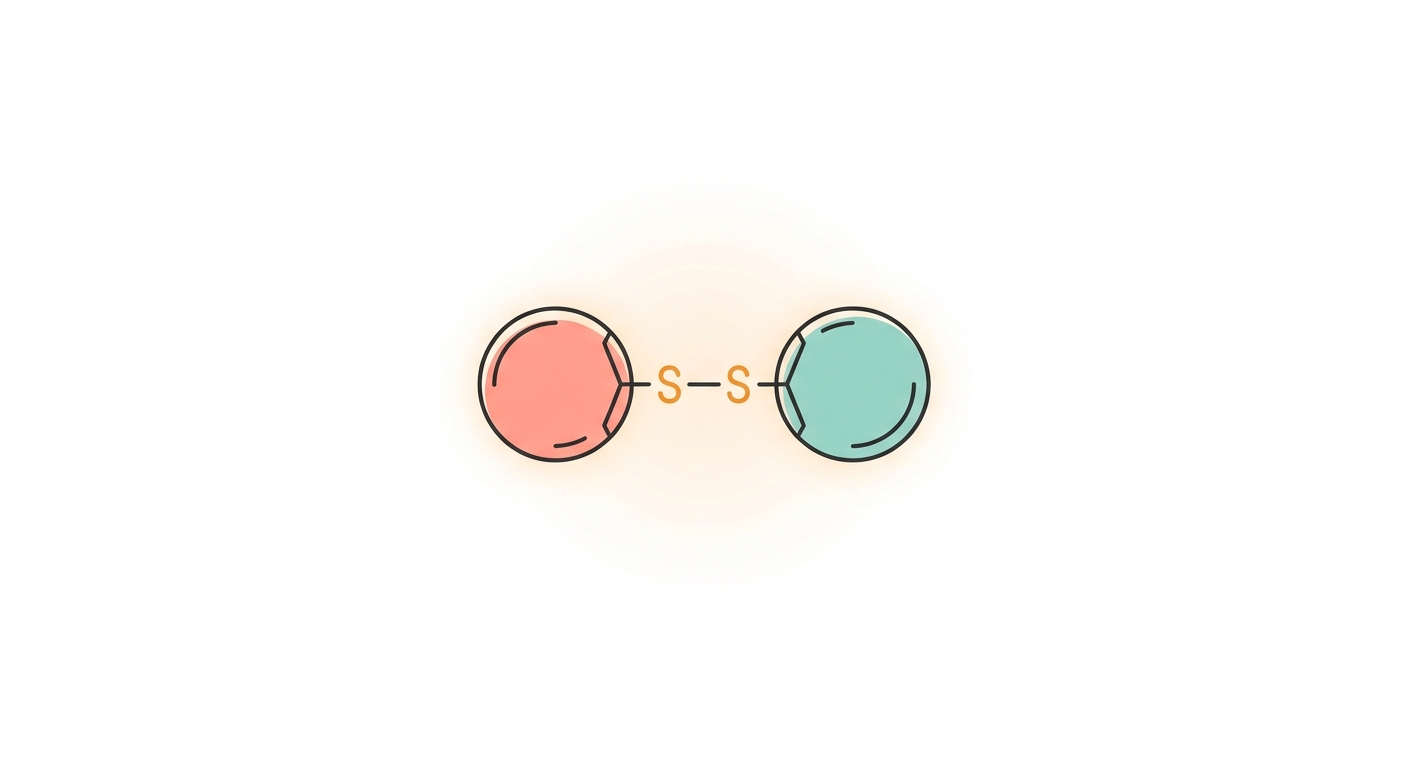
L-Cystine is a sulfur-containing amino acid—two cysteine molecules linked by a disulfide bond—that supplies the rate-limiting step of glutathione synthesis. Glutathione is the body’s strongest endogenous antioxidant, neutralizing UV, pollution, and metabolic ROS. One molecule with leverage across skin defense, collagen preservation, melasma support, and hair strengthening.
- Category: wellness, skin, diet
- Related: glutathione, cysteine, NAC, collagen, antioxidants
What L-Cystine Is
L-Cystine is the oxidized dimer of L-Cysteine. Two cysteine molecules join through a disulfide (S-S) bond. Cysteine itself is a reactive amino acid carrying an -SH (sulfhydryl) functional group; cystine is the stable, paired form.
Once absorbed, cystine is reduced inside the cell back into two cysteines. Cysteine then enters glutathione synthesis alongside glutamine and glycine.
The reason cystine matters: cysteine is the rate-limiting input for glutathione synthesis. Glutamine and glycine are abundant in the diet, but cysteine availability often caps glutathione output.
Why Glutathione Matters
Glutathione (GSH) is the most abundant and powerful endogenous antioxidant in the body, present in every cell.
- Neutralizes ROS from UV, pollution, smoking, and metabolic load
- Conjugates heavy metals and drug metabolites in hepatic detoxification
- Protects collagen and elastin from oxidative breakdown
- Maintains immune cell function
- Modulates melanin synthesis (shifts pheomelanin → eumelanin)
Glutathione levels decline roughly 1-2% per year from the late 20s. By the 60s, levels approach half of those at age 25, paralleling the rise in chronic disease risk.
How L-Cystine Lifts Glutathione
| Step | Substrate | Enzyme |
|---|---|---|
| 1 | L-Cystine | (reduced in gut/cell) |
| 2 | L-Cysteine + Glutamine | γ-Glutamylcysteine ligase (GCL, rate-limiting) |
| 3 | γ-Glutamylcysteine + Glycine | Glutathione synthetase |
| 4 | Glutathione (GSH) | - |
GCL flux is set by cysteine supply. Supplementing L-Cystine increases the input and accelerates GSH synthesis.
Synergy With Collagen Supplements
The Naticol-CySkin trial published in Cosmetics (February 2026) tested a combined fish collagen (Naticol) and L-Cystine (CySkin) supplement in 198 Asian women across two cohorts.
55-65 cohort: Improvements in epidermal hydration, dermal thickness, and wrinkle depth. 18-30 cohort: Improvements in skin texture, redness, and UV protection.
The UV protection signal in the younger cohort traces back to L-Cystine’s glutathione pathway. Collagen peptides drive new collagen synthesis, but newly formed collagen is also a target for UV-induced ROS. L-Cystine raises glutathione output to shield that new collagen from oxidative breakdown.
Collagen alone builds. L-Cystine defends what is built. Net dermal collagen increase depends on both arms working together.
Melasma as an Adjunctive Strategy
Melasma is regional hyperactivation of melanocytes producing brown patches on the cheeks and forehead. The primary pigment is eumelanin, but pheomelanin also rises in the affected area, generating ROS under UV that drives darkening and recurrence.
L-Cystine is not a direct melasma therapy, but it functions as an adjunct.
- Neutralizes ROS generated by pheomelanin under UV
- Reduces oxidative stress signaling that activates melanocytes
- Adds cumulative protection alongside sunscreen and depigmenting agents (2-MNG, Thiamidol)
Dermatologists in some Asian markets recommend IV glutathione for melasma. Oral L-Cystine is a more accessible alternative without the cost or clinical setting requirement.
Hair Strengthening
Keratin—the structural protein of hair and nails—has unusually high cysteine content. Disulfide bonds between cysteines determine hair tensile strength and curl pattern. Supplemental L-Cystine supplies cysteine for newly growing hair keratin, supporting shaft thickness and tensile strength.
L-Cystine is a common component of hair-loss supplements, and it features in protocols for women over 60 with visible loss of hair caliber.
Dosing and Safety
Commercial L-Cystine dose: 50-200 mg/day (as glutathione precursor)
NAC dose: 600-1,200 mg/day (stabilized cysteine with abundant clinical data in lung and liver indications)
Dietary sources: Egg yolk, lean meat, dairy, soy, nuts. A typical diet supplies 0.5-1 g cysteine daily.
Safety: Short-term supplementation is considered safe. Long-term high-dose use (>2 g/day) may cause GI discomfort or nausea. Sulfur-containing molecules carry a characteristic odor that some find off-putting.
Cautions: Asthma patients have reported airway irritation with inhaled NAC in rare cases; oral NAC should be discussed with a physician. High-dose data during pregnancy are limited.
L-Cystine vs NAC
NAC (N-acetyl cysteine) is cysteine with an acetyl group added for gastric stability. It plays the same precursor role with deeper clinical data.
- COPD mucus thinning
- Acetaminophen overdose hepatic protection
- PCOS insulin sensitivity
- Psychiatric adjuncts (OCD, trichotillomania)
L-Cystine has less clinical data but is a smaller molecule with reportedly faster GI absorption in some studies. The choice depends on the goal (glutathione, respiratory, hepatic) and individual GI tolerance.
Practical Daily Application
- Glutathione synthesis goal: L-Cystine 50-200 mg/day or NAC 600 mg/day, with food
- Collagen pairing: Collagen peptides 2.5-10 g/day + L-Cystine 100 mg/day (per the Cosmetics trial model)
- Hair strengthening: L-Cystine + biotin + zinc (assess in 3-6 month windows)
- Melasma adjunct: SPF 50+ sunscreen + next-generation depigmenting agent + L-Cystine or NAC
- Dietary first: Adequate intake of eggs, meat, soy, and legumes covers cysteine needs without supplementation. Supplements are a targeted strategy when diet is deficient or a specific goal applies.
FAQ
Are L-Cystine and L-Cysteine the same thing? They are closely related but structurally different. L-Cysteine is the monomer (single molecule) and L-Cystine is the dimer—two cysteine molecules joined by a disulfide bond. Once absorbed, cystine reduces back to cysteine and feeds glutathione synthesis. Cystine has greater gastric stability and is preferred for oral supplements. NAC (N-acetyl cysteine) is acetylated cysteine, serving the same precursor role with strong clinical evidence.
Why pair L-Cystine with collagen supplements? Collagen peptides act as a signaling cue to stimulate dermal collagen synthesis, but newly made collagen is vulnerable to UV and reactive oxygen species (ROS). L-Cystine raises glutathione output, which neutralizes ROS and protects new collagen from oxidative breakdown. A 2026 study in Cosmetics (198 Asian women) showed the Naticol-CySkin combination improved UV protection in the 18-30 cohort. The synergy is structural: collagen builds, cystine defends.
Glutathione supplements or L-Cystine—which is better? Glutathione itself is a large molecule that is largely degraded in the gut and absorbs poorly orally. Supplementing the precursor—L-Cystine or NAC—is the practical route to raising tissue glutathione. Commercial L-Cystine is dosed at 50-200 mg/day; NAC at 600-1,200 mg/day. IV glutathione delivers the molecule directly but is not an FDA-approved indication and is available only in clinical settings.
This content is for informational purposes only and does not replace medical diagnosis or treatment.